
MV-75 Gets $200 Million for Prototypes as the CR Restricts Long-Lead Production Money
September’s action supports eight development aircraft into FY2027. The Army’s proposed advance procurement line faces the continuing resolution’s restriction on new starts.
October 13, 2026 | 4 min brief
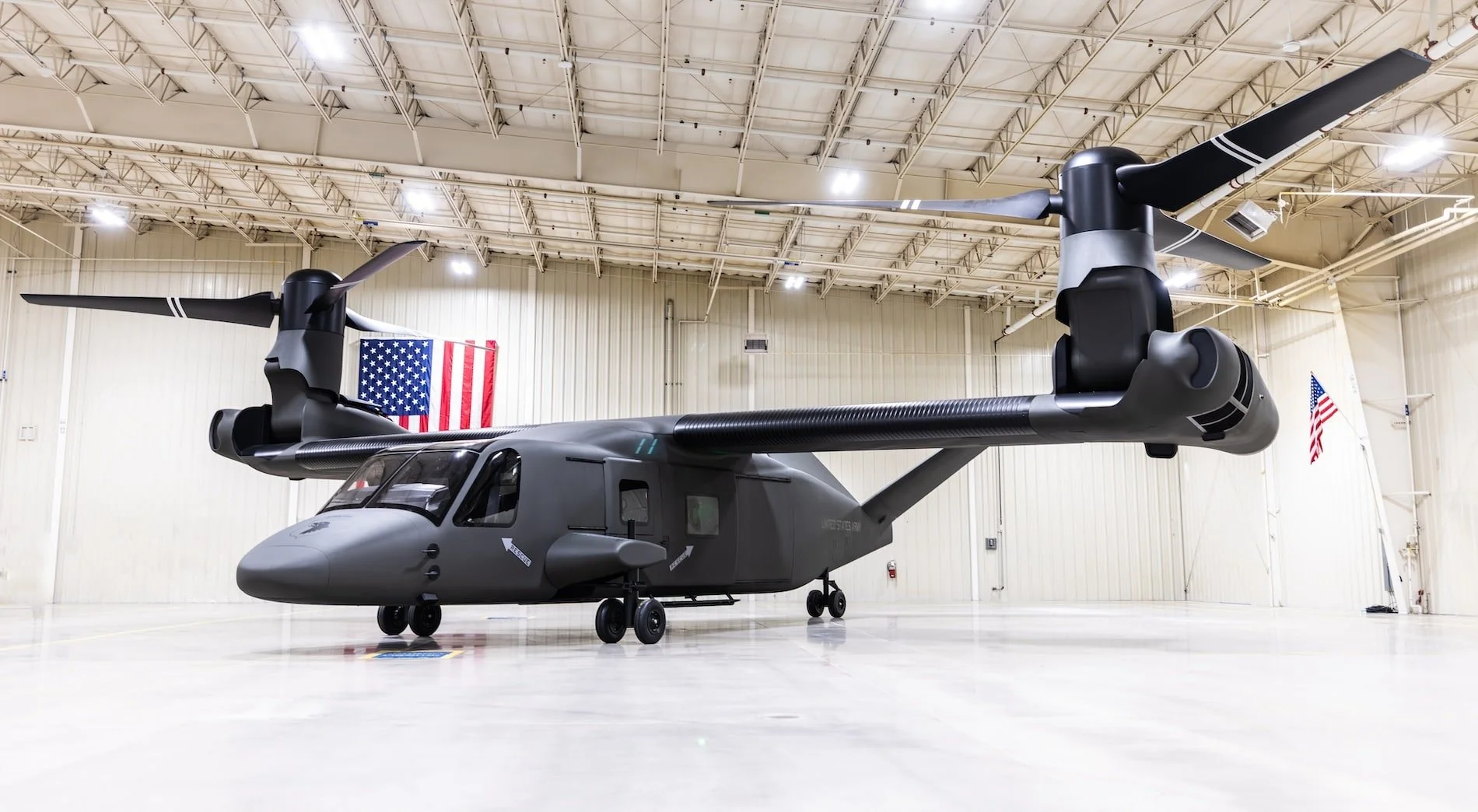
MODERN WARFIGHTER (October 13, 2026) — The Pentagon's September 28 reprogramming action moved $200.246 million into development of the Army's MV-75 Cheyenne II after the program substantially exhausted its available FY2026 funding in mid-July. The money supports continued development and testing. Funding for the first production lot still depends on congressional action.
The September notice describes a "forced stop-work" in mid-July. Textron disclosed in its second-quarter Form 10-Q that Bell continued work at its own risk after the funding shortfall. The Army had previously advised Bell that it planned to avoid issuing a formal stop-work order, according to the filing. Whether that position later changed, and which work stopped, remain unclear from the records reviewed.
The reprogrammed money went into the Army's FY2026 research, development, test and evaluation account, where it remains available for new obligations through September 2027. The Army can obligate those funds during the continuing resolution. Long-lead funding for the first production lot follows a different path. The Army's request is a new procurement start, so it needs a full-year appropriation or a specific congressional exception.
THE DEVELOPMENT MONEY REMAINS AVAILABLE IN FY2027
The $200 million supports continued development and testing, including fabrication of eight prototypes ahead of planned FY2028 production.
The Comptroller lists September’s action as implemented. Its explanation says the July action, FY26-11 PA, approved the need with too few cuts elsewhere to pay for it. It also identifies higher costs from the prime contractor and critical suppliers.
Bell needs the Army to add the funds to its contract before they cover work beyond the amount already allotted. The contract obligation and an end to the furloughs remain unconfirmed.
BELL CUT STAFF AND SUPPLIER SPENDING
Textron’s first-quarter filing describes an April 28 Army notice seeking $350 million in additional funding for the fiscal year. Bell planned spending reductions to extend how long it could keep working. How much of the $350 million need the September action covers, and whether other funds made up the rest, remains unconfirmed.
A May 8 Army letter, described in Textron’s July filing, said a stop-work order was outside the government’s plans. It also advised Bell to stop if allotted funds ran out before additional funding was approved and obligated through a contract modification. Textron’s July filing disclosed headcount reductions, furloughs and reduced supplier spending during the second quarter, with some measures continuing into the third.
FY2027 STARTED WITHOUT THE REQUESTED INCREASE
The development line has two sources of FY2026 money in the Army’s April budget summary, $1.22 billion from regular appropriations and a separate $310 million reconciliation-law spend plan. September’s $200 million went into the first.
For FY2027, the Army requests $2.14 billion for development. Modern Warfighter calculates that as about $920 million above the FY2026 discretionary enacted amount.
FY2027 began October 1 under the enacted continuing resolution, which runs through December 11 unless full-year appropriations arrive sooner. It generally holds funding at FY2026 rates. The MV-75 is absent from its exceptions, so the requested increase waits on full-year appropriations.
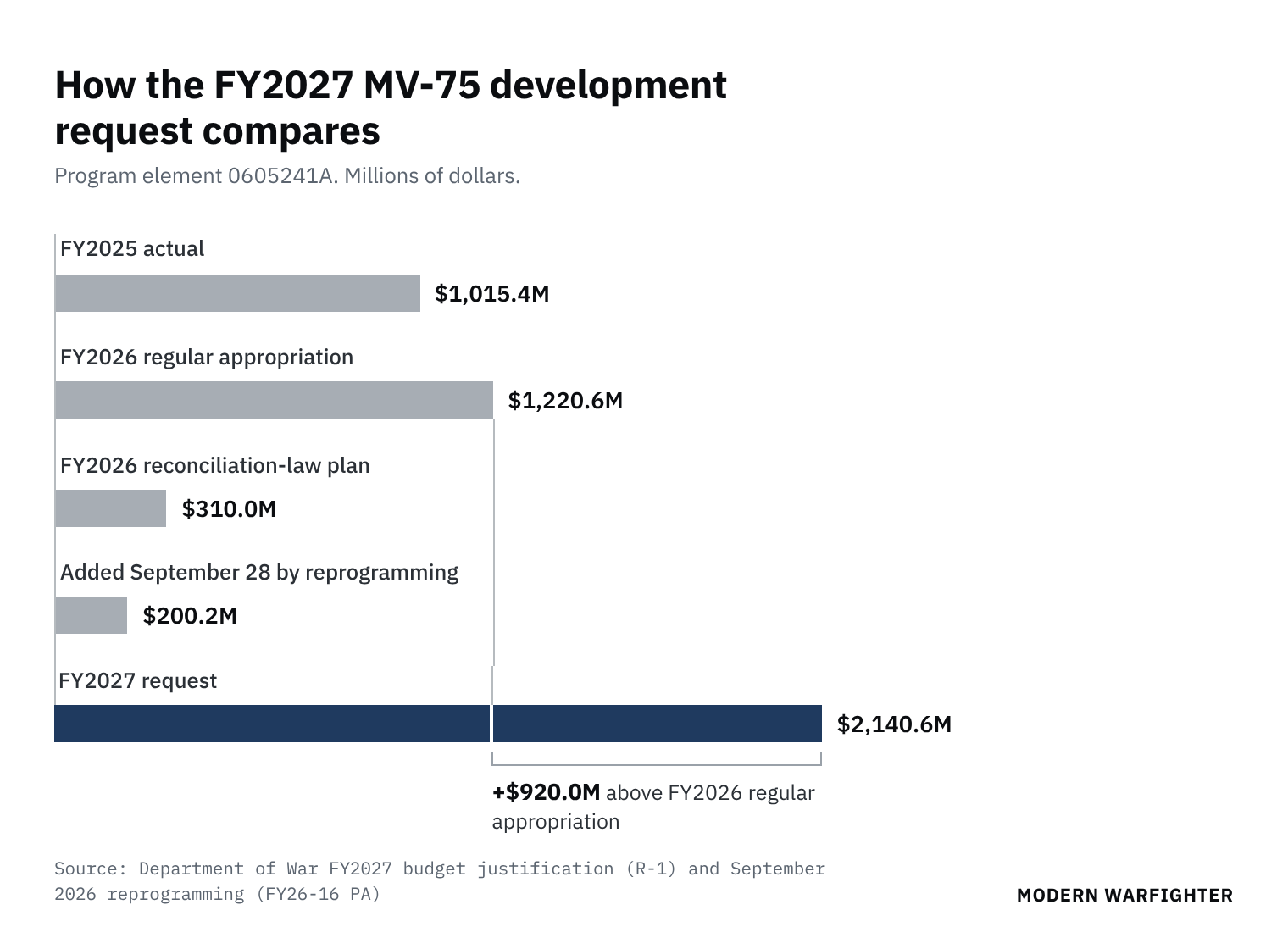
The FY2027 request is more than double the FY2025 actual and about $920 million above FY2026’s regular appropriation. FY2026’s reconciliation-law plan and September’s reprogramming appear as separate lines.
Chart: Modern Warfighter
The Army was already cautious about schedule before the CR began. In April, Maj. Gen. Clair Gill declined to commit to a first-flight date, saying, “It’s going to happen when it’s going to happen.” He also warned that unpredictable funding strains suppliers and can interrupt the effort to accelerate the aircraft.
LONG-LEAD PRODUCTION NEEDS ITS OWN AUTHORITY
The Army’s aircraft procurement justification calls the Future Vertical Lift Family of Systems line an FY2027 new start. It requests about $127 million for MV-75 long-lead materials and government-furnished equipment supporting the first production lot of eight aircraft planned for FY2028. Those production aircraft are separate from the eight development prototypes. The Army cites component lead times exceeding 24 months.
Section 102 of the enacted continuing resolution restricts new production and activities that lacked FY2026 funding. On the Army’s new-start classification, those restrictions prevent the CR from funding the planned advance procurement line without an exception. September’s development addition does not supply that procurement authority.
In July, Textron expected the long-lead low-rate initial production option in late 2026 or early 2027. It described the option as largely fixed price and forecast a $60 million to $110 million unfavorable accounting adjustment because costs were higher than assumed when the program was bid. The company still expected a positive profit margin across the overall program. Its filing did not identify the option’s funding source.
September’s money supports the prototypes into FY2027. The first production lot’s long-lead money waits on Congress, and Bell already expects that work to cost more than it bid.
RELATED COVERAGE
-
![]()
Replace, Extend, Modernize: The Black Hawk Is Running on Three Clocks
Aug. 22, 2026 · 7 min read
MV-75 is moving toward fielding, but the Army still depends on the Black Hawk. Production and modernization decisions will determine how much of the existing fleet remains viable through that transition.
-
![]()
16 Black Hawks in FY2026, One Requested for FY2027
September 25, 2026 · 4 min read
The Army added $234.46 million for 16 UH-60Ms, with deliveries planned for FY2028. Its FY2027 request calls for just one aircraft, raising questions about the production workload that follows.
-
![]()
Up to 24 More T901 Engines Would Stay on the Development Contract
Sept. 26, 2026 · 4 min read
The Army could add up to 24 T901 engines under GE's development contract. Installation, fielding, and support would remain part of a separate production effort.
SOURCES: U.S. Department of War, U.S. Army, U.S. Congress, Textron, Bell, Breaking Defense
VERIFICATION: The source record behind this analysis, including what could not be confirmed. VIEW VERIFICATION →
TAGGED: MV-75 Cheyenne II, FLRAA, Bell, Acquisition Briefs, Army Aviation
-

ANDRES CARDENAS | Lead Analyst
Modern Warfighter Defense Publication
/ STAY CONNECTED /