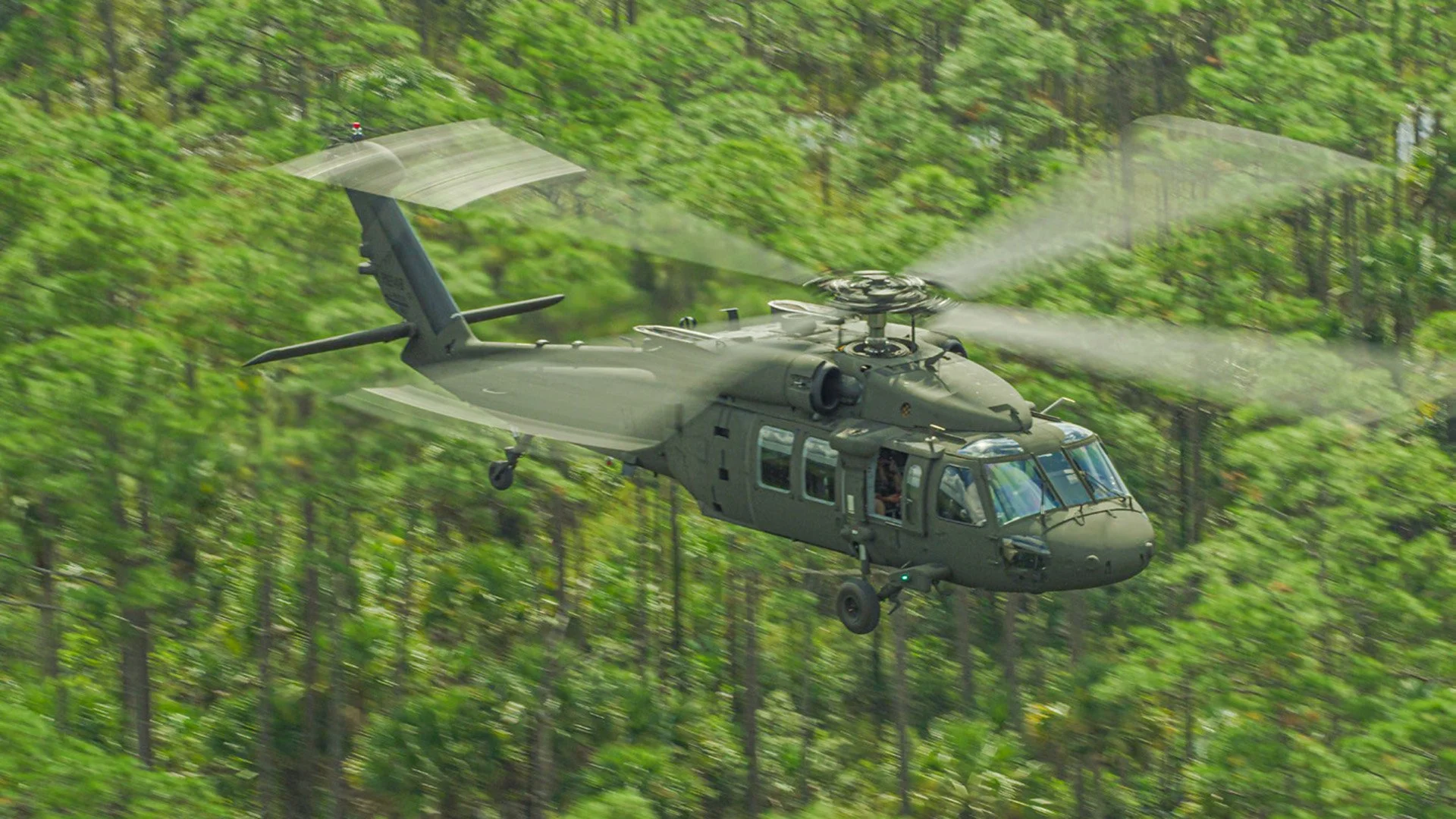

Replace, Extend, Modernize: The Black Hawk Is Running on Three Clocks
August 22, 2026 | Updated October 12, 2026 | 7 min brief
MODERN WARFIGHTER (August 22, 2026) — The Army is managing three separate Black Hawk-adjacent decisions at the same time, and each one is shaping how much room the others have to move.
In February 2024, the Army canceled the Future Attack Reconnaissance Aircraft and redirected the freed funding across four priorities. Those priorities included a new multi-year UH-60M production deal, formal production approval for the CH-47F Block II Chinook, continued unmanned systems investment, and Future Long-Range Assault Aircraft development on it’s existing schedule. At that point, FLRAA was proceeding as planned and the Black Hawk multiyear deal looked secure.
The picture changed by May 2025. Army leaders told Congress they wanted FLRAA years earlier than planned, and in the same testimony, Army Secretary Dan Driscoll and Chief of Staff Gen. Randy George declined to guarantee the next Black Hawk multi-year contract. A year later, at the Army Aviation Association of America's April 2026 conference in Nashville, the picture sharpened again. The Army now describes its accelerated tiltrotor as complementary to the Black Hawk instead of its replacement, and the question on Black Hawk production has shifted from whether new aircraft get built to what contracting structure builds them.
Three clocks are running on the same fleet: how fast MV-75 arrives and how much of the mission it actually takes over, how long new Black Hawks keep coming off the line and under what arrangement, and how far the Army modernizes the thousands it already owns while the other two clocks run.
CLOCK ONE: HOW FAST MV-75 ARRIVES, AND HOW MUCH IT REPLACES
The Army's 2024 baseline already placed low-rate production for the Future Long-Range Assault Aircraft in 2028. What changed since is how much of the surrounding schedule the Army wants compressed toward that date. Gen. George told the House Appropriations defense subcommittee in 2025 the service was "broadly moving it up... into the 2028 timeframe." By April 2026, the program, renamed MV-75 Cheyenne II, had a public target: the first unit equipped with 24 aircraft by fiscal year 2030.
The Army has stopped adding dates after that marker. Maj. Gen. Clair Gill, the program acquisition executive for maneuver air, told reporters in April 2026 that first flight would happen "when it's going to happen," and that with unlimited money and engineers the Army could compress the remaining schedule to a matter of months. An acquisition executive declining to promise a date while describing how fast the program could move if funding allowed is a signal about where the real constraint sits.
That funding constraint became concrete in the Pentagon’s September 28 reprogramming action. It added $200.246 million to MV-75 development after cost increases from the prime contractor and key suppliers left the program short of funds. The money supports continued development, testing and fabrication of eight prototype aircraft ahead of planned production in FY2028.
Physical progress has continued underneath that caution. Bell completed cockpit validation with pilots from the 101st Combat Aviation Brigade in May 2026 and finished assembly of the aircraft's wing structures by June. The company's public roadmap still points toward first flight testing in 2027.
Bell's Modular Open Systems Approach and a digital-engineering backbone, built around a virtual prototype the Army accepted in 2025, support the compressed schedule by letting testing and early production work run closer together than a traditional sequential program would allow. That architecture is intended to reduce schedule risk and accelerate iteration. The Government Accountability Office has separately found that digital-twin and digital-thread practices across the Army's newer programs remain only partially implemented, a caveat worth keeping in view given how much of FLRAA's acceleration case rests on those tools.
The schedule settles only part of the problem. Scope remains open. Col. Ryan Nesrsta, the Army's project manager for the Utility Helicopters Project Office, described MV-75 at the Nashville conference as complementary or supplemental to the Black Hawk and said Army analysis points toward substantial Black Hawk numbers through 2050 and later. That single reframing changes what Clock One is actually measuring. The question is how fast MV-75 becomes real enough to take over the missions the Army intends to hand it, while the Black Hawk keeps flying everything else for decades.
The performance case behind the acceleration stands on its own. Gen. James Rainey, who leads Army Futures Command, told Congress the aircraft needs to double both range and speed relative to the Black Hawk, framing that requirement around the distances Pacific operations demand. MV-75 is built to carry up to 14 troops, three more than the Black Hawk’s eleven, with roughly 10,000 pounds of external payload capacity. Those gains change the scale of what Army aviation can reach, moving from an airframe shaped by the distances of Central Europe toward one built for the wider geography of the Indo-Pacific.
The employment concept changes along with the numbers. Combat aviation brigades gain the ability to launch an assault from farther outside a contested area, reducing the need to stage closer to the objective and cutting exposure to enemy long-range fires during a vulnerable phase of air assault operations. Army aviation doctrine has organized around shorter-range insertion from forward staging areas since the Black Hawk entered service in 1978. MV-75 is built around what the Army calls Large-Scale, Long-Range Air Assault, a concept shaped by distances the current fleet struggles to cover. Clock One measures more than the arrival of a new aircraft. It measures how quickly Army air assault doctrine can adapt to a reach the force has never had at this scale.
CLOCK TWO: WHAT REPLACES THE CURRENT PRODUCTION DEAL
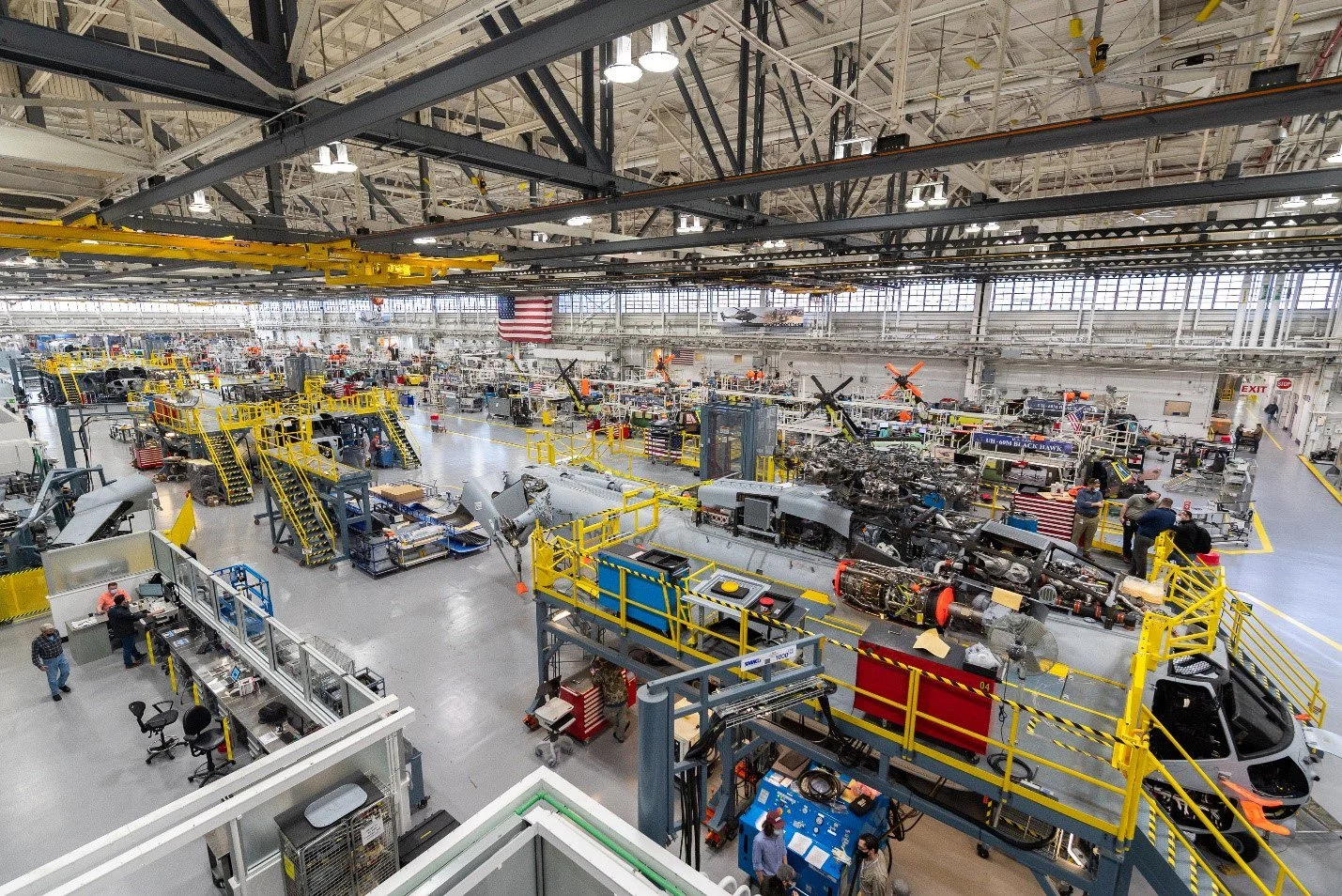
Sikorsky's Stratford, Connecticut facility, where UH-60M production has continued under the current multi-year-ten contract.
Media: Lockheed Martin
The current Black Hawk multi-year contract, the tenth in the line, was signed in June 2022 and could ultimately be worth $4.4 billion covering more than 270 helicopters including foreign military sales. Sikorsky has delivered 148 aircraft against that contract so far. The question hanging over Clock Two is what comes after it.
That question sharpened at the same Nashville conference. Nesrsta said he "can't speak to the Army's intent beyond this current contract," though he described new-build production, commercial modification of existing aircraft, and continued use of the organic industrial base as mutually beneficial to the Army and industry, citing sustained foreign military sales demand. Ken Demaree, Sikorsky's vice president of Army and Air Force systems, said the company is working with the Army to define the next production contract, and that a traditional multi-year deal remains one option alongside more flexible, multiple-year arrangements built around variable annual quantities. Sikorsky has already received an advance-procurement award for long-lead items and wants the next production line moving in fiscal year 2028.
The Army's own FY2027 budget documents underline the ambiguity instead of resolving it. The base budget request carried just $39.3 million for a single UH-60M next fiscal year. The figure remains subject to change through the appropriations process. Separately, congressional appropriators added $65 million for UH-60 advance procurement tied to FY2027, on top of that base request, bringing total near-term funding above $104 million. Advance procurement secures long-lead components without determining the eventual contract structure. Nesrsta noted separately that Black Hawk exchange sales through the General Services Administration generate additional funding for new aircraft outside the budget line entirely, meaning the published numbers still understate what the Army can spend on production.
The real story on Clock Two is production architecture. The Army and Sikorsky are negotiating what follows the current five-year deal. Options include another long-term agreement, a more flexible arrangement with adjustable annual quantities, or a structure built around the exchange-sale funding stream Nesrsta described. Army analysis points toward continued new-build procurement while the contract structure and annual volume remain open. The unresolved questions are how much gets built, how it is funded, and how closely production tracks the pace at which MV-75 enters formations.
CLOCK THREE: HOW FAR THE EXISTING FLEET GETS MODERNIZED
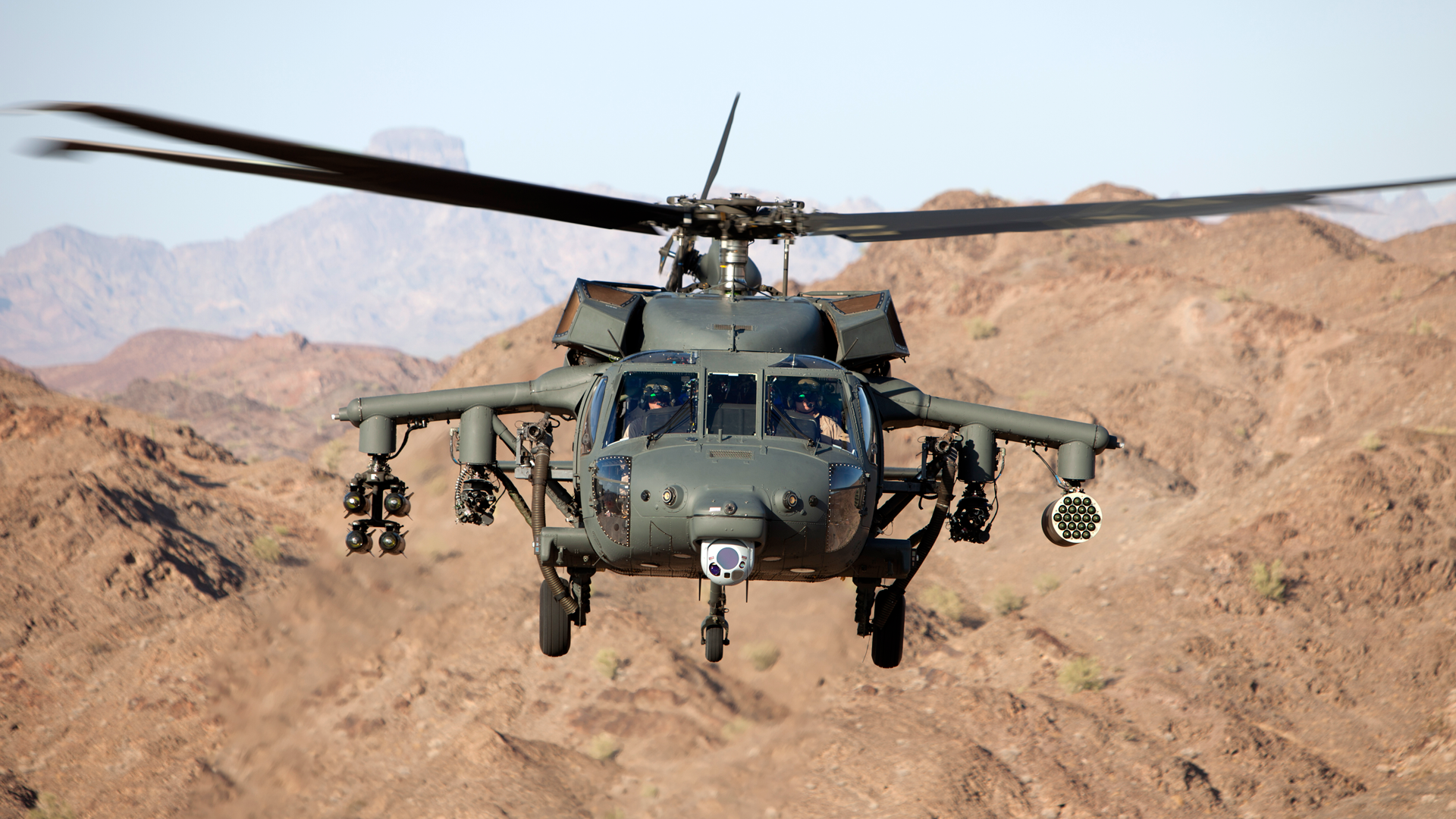
The third clock runs on two separate tracks that are easy to collapse into one. Sikorsky delivered the Army's first UH-60MX in March 2026, a fully fly-by-wire, optionally piloted Black Hawk built around the MATRIX autonomy suite and owned and operated by the Army as an experimental testbed under the Strategic Autonomy Flight Enabler program. Weeks later, Sikorsky introduced production-ready armed kits at the Army Aviation Warfighting Summit in Nashville. The armed kit is a commercial offering available through foreign and direct commercial sales channels. It remains outside the Army's confirmed programs of record for now. Modern Warfighter covered both in detail this spring.
Nesrsta's own framing ties this track directly to the other two. He described current Black Hawk modernization work as pursuing platform-agnostic solutions built to serve both the existing fleet's mission set and MV-75's, language that treats the installed fleet's upgrade path as infrastructure for both aircraft, not a hedge against one of them failing. Given how many Black Hawks the Army now expects to operate past 2050 regardless of MV-75's pace, that framing tracks the evidence. Autonomy, digital modernization, and other retrofit paths are how the Army extracts more capability from a fleet whose size, per the Army's own numbers, is going to remain large for decades. The armed kit sits alongside that argument as evidence of what industry sees as possible on the same airframe, even before the Army decides whether to adopt it as a program of record.
THREE CLOCKS, ONE FLEET
The Army is keeping the Black Hawk in service while fielding MV-75 alongside it. Its running three independent clocks against a fleet that will do different jobs depending on how each one resolves. Clock One determines how quickly MV-75 becomes real enough to assume its share of the assault mission. Clock Two determines how many new Black Hawks keep entering the fleet, and under what contracting structure, while that happens. Clock Three determines how capable the Black Hawks already in service become no matter what the other two clocks decide.
Acquisition schedules move on their own, and the Army has planned around that possibility before. The deeper risk sits in the gaps between the clocks, specifically whether the Army settles Clock Two's contracting structure and volume before MV-75's accelerated schedule forces a decision under pressure instead of on its own timeline.
STRATEGIC ASSESSMENT
The Black Hawk fleet is doing something unusual. It is simultaneously handing part of its mission set to MV-75, moving through an unresolved production transition, and absorbing new autonomy and armament. The friction comes from running all three decisions against an incomplete budget picture. Army officials have been candid in public testimony about which parts remain unresolved.
The question worth tracking is whether Multi-Year XI survives in its proposed form or gives way to a different production architecture. The Nashville comments leave both possibilities open. What matters is the structure that follows the current multiyear deal, the volume it supports, and whether that volume matches the Army's enduring fleet requirement. Aircraft age, attrition, foreign demand, and the substantial Black Hawk force expected through 2050 all shape that number alongside MV-75's eventual mission share. Too much production spends against aircraft the future fleet may never need. Too little creates a gap that accelerated MV-75 fielding may struggle to cover.
Rainey’s Pacific framing is the reason the schedule compressed in the first place. A force built around a 1978-era helicopter’s reach falls short across Indo-Pacific distances, and closing that gap on the accelerated end of the timeline only works if the Black Hawk side of the fleet is sized correctly while it happens. Get the fleet math wrong and the Army either sinks cost into Black Hawks a smaller enduring fleet never needed or leaves a reach requirement MV-75 is still too early to fill alone.
RELATED COVERAGE
-
![]()
16 Black Hawks in FY2026, One Requested for FY2027
September 25, 2026 · 4 min read
The Army has funded a 2028 production lot. Its next agreement must reconcile annual buying flexibility with the factory's need for predictable work.
-
![]()
The Engine That Outlived Its Own Program
August 23, 2026 · 8 min read
T901 outlived FARA, the aircraft it was built to power, and it now recovers the performance Black Hawk and Apache lost across decades of modernization.
-
![]()
ARMED BLACK HAWK: LIFT, LETHALITY, AND THE FIGHT FOR MASS
April 15, 2026 · 3 min read
The Armed Black Hawk pushes a proven utility platform into armed escort and close support roles without giving up its lift mission.
TAGGED: Black Hawk, MV-75 Cheyenne II, Army Aviation, Force Modernization, Future Vertical Lift, Defense Acquisition
-

ANDRES CARDENAS | Lead Analyst
Modern Warfighter Defense Publication
/ STAY CONNECTED /