
The Black Hawk Enters the Autonomy Era
October 31, 2025 | 5 min brief
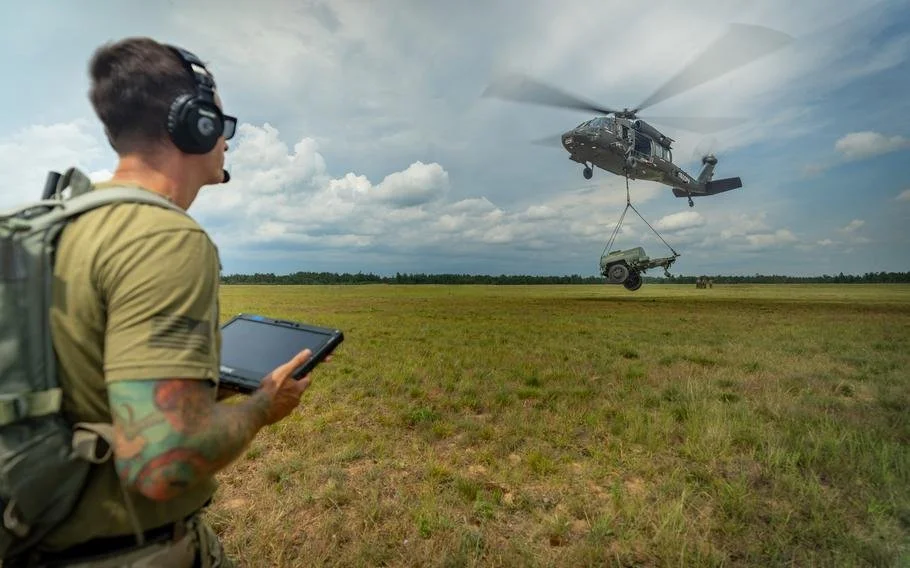
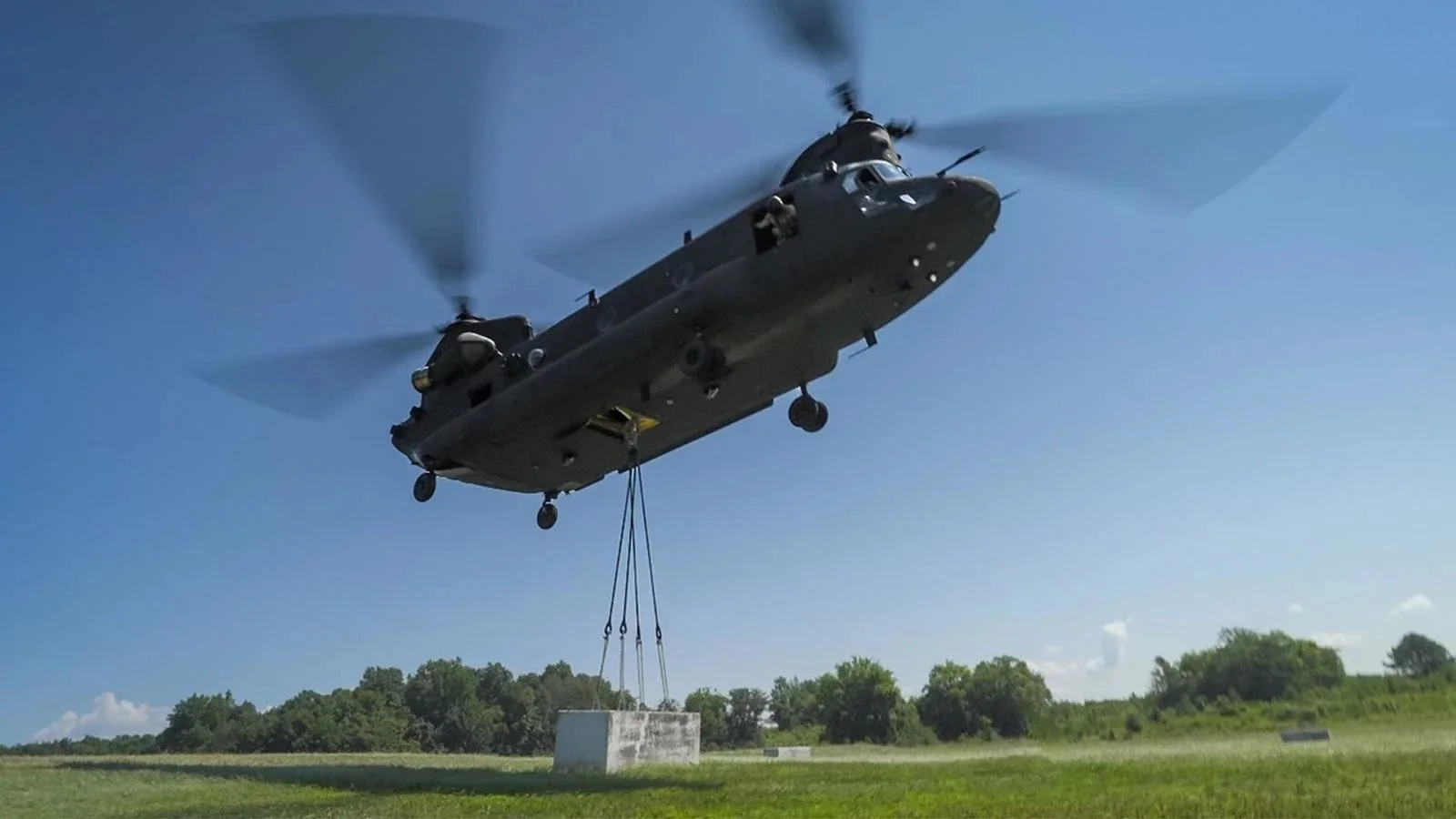
CAMP GRAYLING, MICHIGAN (NADWC) — During Northern Strike, a U.S. Army National Guard soldier used a tablet to command an optionally piloted Black Hawk through a sling-load operation under field conditions. The aircraft carried a load approaching 3,000 pounds while the autonomy stack managed load oscillation, a task that normally requires direct pilot compensation.
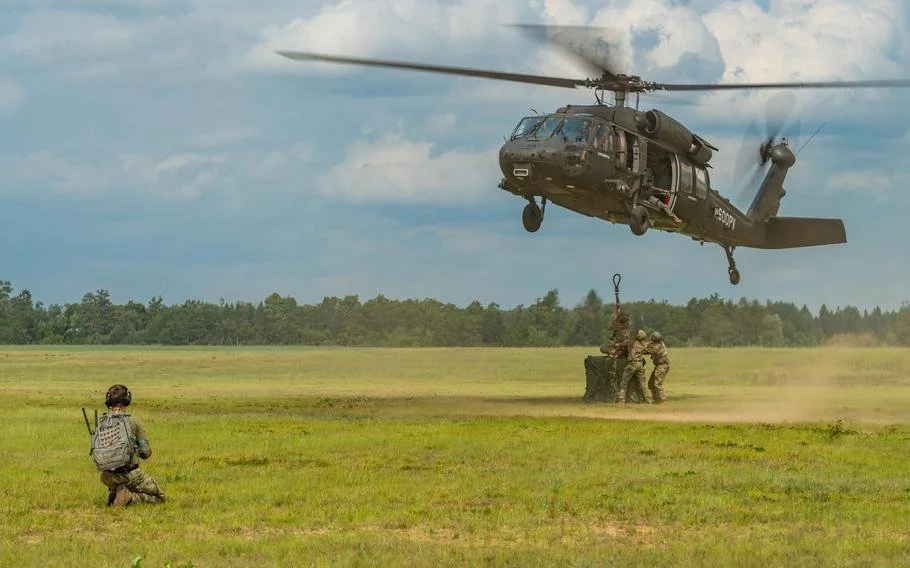
Sikorsky’s MATRIX-enabled Black Hawk executes a sling-load operation during Northern Strike after a Sergeant First Class planned and directed the mission through a tablet interface.
Media: U.S. Army / Northern Strike Photo
By placing a tablet interface in the hands of a non-aviator to execute the mission, the Army has moved flight control authority outside the cockpit. Mission execution is becoming a function of system architecture instead of individual pilot proficiency.
The demonstration coincides with a broader restructuring of Army aviation. Under Headquarters, Department of the Army (HQDA) aviation transformation guidance and Human Resources Command (HRC) MILPER directives implementing the FY2026–2027 force structure realignment, roughly 6,500 active-duty aviation authorizations are being eliminated from a branch of approximately 30,000 soldiers. That reverses the posture from less than a decade ago, when the Army was offering bonuses to close a warrant officer shortage of nearly 700 pilots. The UH-60MX's autonomy stack supports that transition. As the Army reduces aviation force structure, autonomy becomes one of the capabilities that allows the service to accept a smaller force while preserving operational capacity.
The transition introduces the operator as a new role within the aviation command chain. The Army has yet to define how that role will be trained, certified, or integrated into aviation doctrine, even as force structure contracts. The same challenge extends into Future Long Range Assault Aircraft development, where autonomy and mission architecture will determine how vertical lift scales across a smaller aviation force.
That control shift began with DARPA's Aircrew Labor In-Cockpit Automation System (ALIAS), launched in 2014 to reduce pilot workload and enable increasingly autonomous flight. Sikorsky's MATRIX autonomy stack builds on that foundation. The UH-60MX's transition to full-authority fly-by-wire replaces mechanical flight control linkages with a digital architecture that allows the autonomy stack to control the aircraft.
The significance of that architecture becomes clear when compared with the rest of the Black Hawk fleet. The UH-60L and UH-60M retain mechanical flight control linkages that would require significant structural overhaul before MATRIX could assume complete control. Sikorsky has already integrated MATRIX autonomy software across all three Army Black Hawk variants—the A, L, and M—but the MX is the first with full-authority fly-by-wire, providing the digital backbone that enables autonomous control.
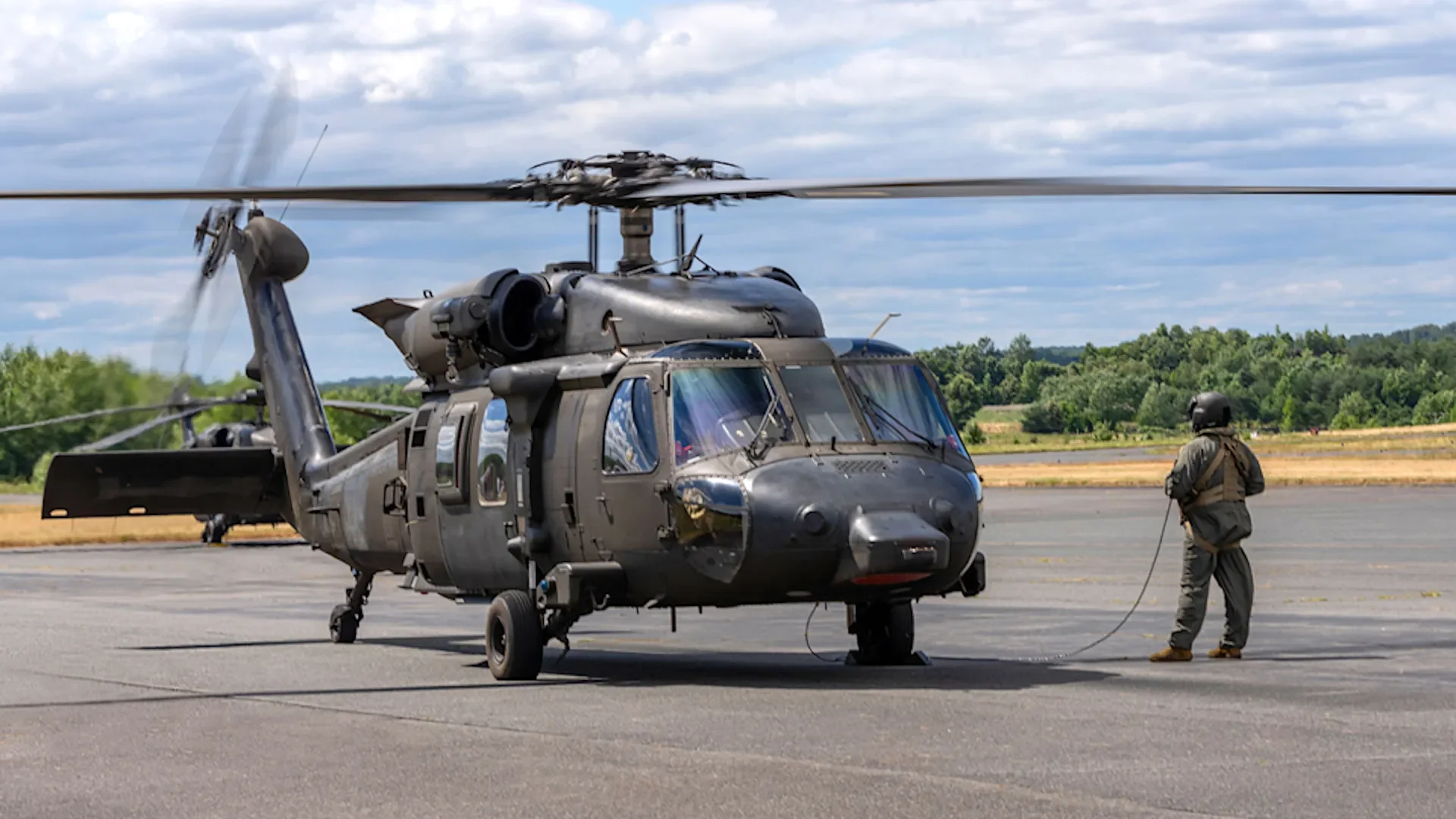
Sikorsky and DARPA demonstrate autonomy aboard an optionally piloted Black Hawk, showing the early framework behind later MATRIX-enabled flight operations.
Media: Sikorsky / DARPA (2019)
That distinction is what makes MX the real test article. MOSA validation on this platform isn't abstract: the same open-standards approach has already cut cross-service integration time on comparable Army avionics work from months or years down to weeks, according to a demonstration cited by NAVAIR's open-architecture program.
If MATRIX and future autonomy upgrades can integrate on MX at anything close to that pace, without airframe redesign, that's the proof MOSA advocates need. If they can't, MX is where that gap surfaces first. The open architecture aligns with FACE and SOSA standards, the DoD frameworks built specifically to let government acquire software and hardware modules from separate vendors without being locked into any one contractor's proprietary system.
Operators assign routes, manage flight behavior, and execute mission tasks through a tablet interface. Command input becomes aircraft action across pilots, operators, and onboard systems. Sikorsky has said the platform is meant to lay groundwork for future networked systems, not just fly the current mission profile, which is the claim the ALE control-node role that follows is actually testing.
As the Army expands its use of air-launched effects, small expendable systems released from rotary-wing platforms into contested airspace, an optionally piloted Black Hawk operating within a distributed control architecture becomes a viable control node for those systems, extending reach without extending risk to crew. That control node function depends on a link that has to hold. Tablet-directed control and ALE tasking both route through the same datalink the aircraft uses to receive commands. Under contested electromagnetic conditions, jamming or spoofing that link doesn't just degrade a sensor feed. It cuts the connection between operator intent and aircraft action. The architecture that extends reach also concentrates risk into a single dependency.
"This capability will enhance mission effectiveness and survivability for warfighters today and lay the groundwork for tomorrow's networked systems," said [Rich Benton, Vice President and General Manager, Sikorsky.]
Northern Strike represents the point where autonomy moved from controlled demonstration into operational application. The aircraft still performs the same mission, but the method of execution is beginning to change around it. Northern Strike answered whether tablet-directed autonomy could execute under field conditions. The next question is whether that model can scale across Army aviation.
Key Takeaways
• Tablet-directed control shifts Black Hawk authority beyond the cockpit, placing mission execution closer to the operator
• UH-60MX expands the control architecture across pilots, onboard systems, and external mission elements, redefining how rotary-wing assets are tasked
• MATRIX autonomy reduces cockpit dependency, while keeping the human role inside the control chain
• ALE integration points to a larger network role, where the Black Hawk supports launched effects, distributed sensing, and operator-directed aviation
• Data-link resilience remains the unresolved pressure point, especially under contested electromagnetic conditions
• UH-60MX is less about replacing the Black Hawk than changing how the aircraft is controlled, tasked, and used across future formations
TAGGED: Autonomous Aviation, UH-60MX Black Hawk, Sikorsky MATRIX, Future Vertical Lift
RELATED COVERAGE
-
![]()
Inside the UH-60Mx Autonomy Architecture
October 31, 2025 · 4 min brief
The UH-60MX pushes Black Hawk autonomy into field conditions, where lost links, electronic warfare, and control outside the cockpit become part of the survivability problem.
-
![]()
Sikorsky’s Real Gambit Behind Nomad
July 23, 2026 · 8 min brief
Nomad tests whether Sikorsky can scale a rotor-blown-wing aircraft family while MATRIX secures its place across the wider autonomous aviation market.
-
![]()
The Permanent Platform: Chinook Block II and the Autonomy Pivot
May 25, 2026 · 7 min read
Six decades of dominance, zero plans to retire. The Block II pushes the legendary tandem-rotor further with more lift, smarter systems, and same battlefield indispensability.
-

ANDRES CARDENAS | Lead Analyst
Modern Warfighter Defense Publication
/ STAY CONNECTED /