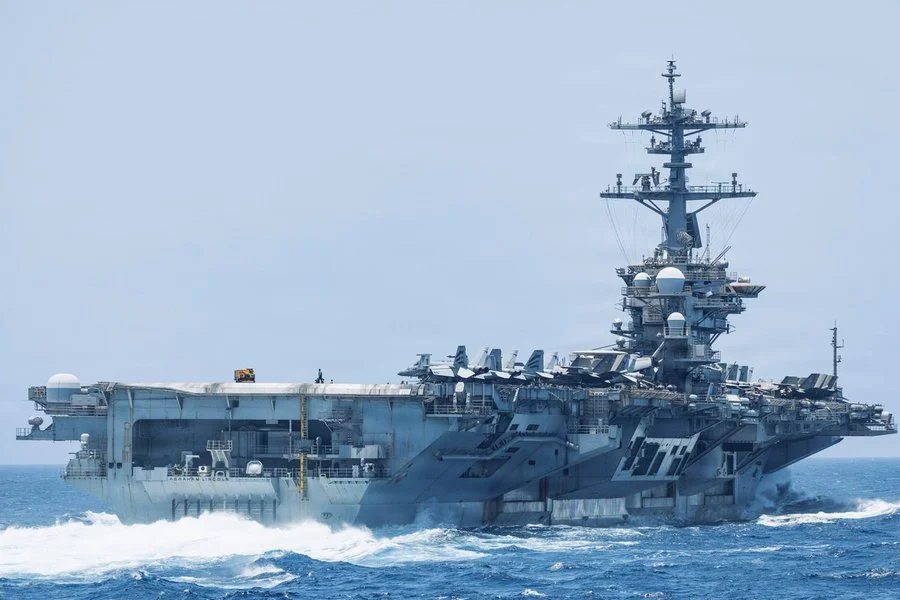

One Navy, Multiple Crises: The Hidden Cost of the Middle East Carrier Surge
Carrier deployments in the Middle East reveal the growing cost of sustained naval presence across multiple theaters.
Published: June 18, 2026 | 5 min read
EDITOR'S NOTE: Germany's Fulda and Mosel entered the Suez Canal today, hours after the United States and Iran signed an MOU ending active hostilities from Operation Epic Fury. The argument this piece makes is more relevant now than when it was written.
Washington, D.C. - June 18, 2026 - Germany's decision to position naval assets toward a potential Strait of Hormuz mission arrives as the United States, France, and Britain begin absorbing the costs of their own deployments.
The past several months demonstrated something allied navies already understood but rarely had to demonstrate publicly. They can concentrate combat power fast. Holding that concentration indefinitely is a different problem.
THE SURGE
In April, the United States operated three carrier strike groups in the Middle East simultaneously, the first time the Navy had concentrated that level of combat power in the region since 2003. USS Gerald R. Ford, USS Abraham Lincoln, and USS George H.W. Bush formed the core of a presence supporting deterrence, maritime security operations, and active combat operations tied to Operation Epic Fury.
The deployment demonstrated the Navy's ability to generate combat power rapidly. The cost of doing so is a separate ledger.
That cost runs deeper than the April surge. Abraham Lincoln departed San Diego in November for a scheduled Indo-Pacific deployment, operating in the South China Sea under Seventh Fleet. The Navy redirected it to the Middle East in January, months before the three-carrier concentration materialized. The Pacific commitment was drawn down before the surge began.
PRESENCE HAS A PRICE
A carrier strike group is not a ship. It is an ecosystem built around a single hull, and every element of that ecosystem consumes resources whether the carrier is launching strikes or simply maintaining station.
Each carrier deploys with cruisers and destroyers screening against surface, air, and subsurface threats. Logistics vessels maintain fuel and ordnance at sea. Submarines operate in support. Aircraft consume flight hours, maintenance cycles, and ordnance whether weapons are fired or not. Sailors operate on deployment schedules with hard limits that bend poorly to operational demand.
The Red Sea added pressure on top of pressure. U.S. naval forces conducting Houthi intercept operations since late 2023 had already burned through significant stocks of SM-2 and SM-6 interceptors, missiles that cost between two and four million dollars per round, against drones and cruise missiles that cost a fraction of that. The math runs in one direction. Every intercept that protects a commercial vessel is an interceptor gone from the magazine.
Sustaining three carrier strike groups in one theater compounds every one of those costs simultaneously.
At the height of the surge, three carriers operated in the Middle East while four others were in maintenance or scheduled availabilities. George Washington remained the primary forward-stationed carrier presence in the Indo-Pacific. The margin between global demand and available naval capacity had narrowed to a single hull, and that hull was already committed.
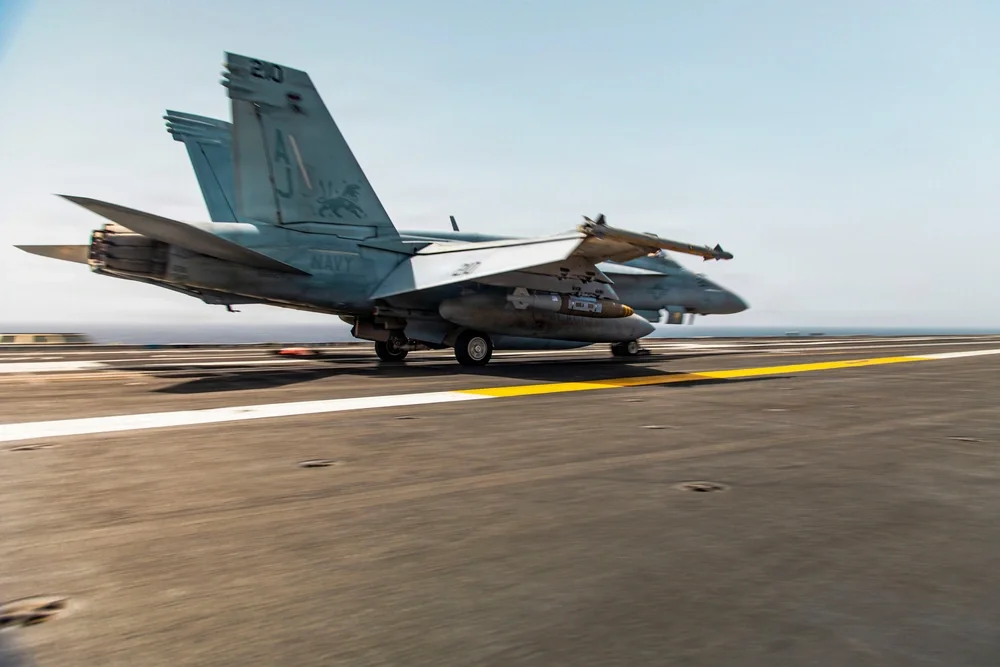
An F/A-18 launches from a carrier flight deck during operations in the Middle East, 2026. U.S. Navy photo.
THE ALLIED EQUATION
That is where allies enter the calculation, as an operational necessity rather than a political gesture.
France moved the Charles de Gaulle carrier group into the Red Sea and Gulf of Aden in May as part of broader French and British preparation for a potential multinational Hormuz mission. Germany is positioning naval vessels Fulda and Mosel toward the region for a possible mine-countermeasure role.
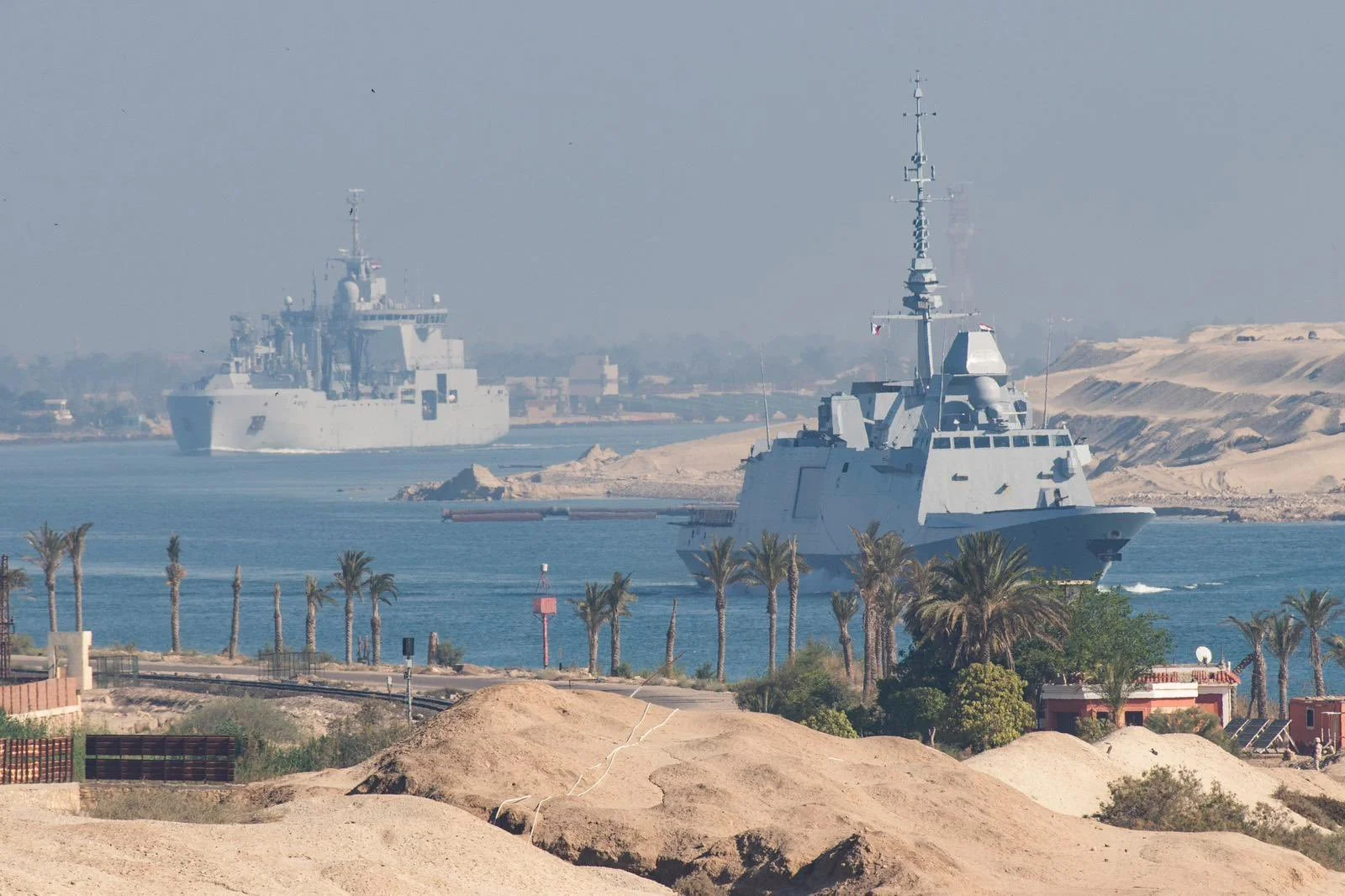
French naval vessels transit the Suez Canal during regional maritime security operations tied to the Red Sea and Strait of Hormuz.
Germany's contribution is a highly specialized capability the mission explicitly requires, mine countermeasure capacity directly tied to keeping one of the world's most critical maritime chokepoints open. France and Britain are expected to carry significant weight in any multinational Hormuz framework. Germany adds a function that reduces demand on U.S. and French assets already managing wider commitments.
A carrier committed to the Strait of Hormuz corridor is unavailable for the Western Pacific. A destroyer on escort duty in the Gulf of Aden is unavailable for operations in the Philippine Sea. Concentration in one theater defers requirements everywhere else, and the list of deferred requirements is long.
Allied navies absorbing secondary missions is a familiar concept. The scale of the requirement driving it is new.
THE NEXT CRISIS
Generating combat power is the solved problem. April settled that. The Hormuz mission taking shape is an attempt to distribute that burden across the alliance, and Germany, France, and Britain are filling gaps because sustained presence has a cost and the demand is real.
The past ninety days demonstrated that Western navies can still concentrate power when required. Whether they can sustain that concentration while meeting demands elsewhere remains the open question, because the assets do not multiply. They redistribute.
TAGGED: Naval Power, Force Posture, Indo-Pacific, Strait of Hormuz, Charles de Gaulle
-

ANDRES CARDENAS | Lead Analyst
Modern Warfighter Defense Publication
/ STAY CONNECTED /