
The Army is distributing data access and staff work beyond fixed headquarters. Its next test is whether authority moves with them.
September 23, 2026 | 9 min brief
NGC2 and the Fight to Distribute Command
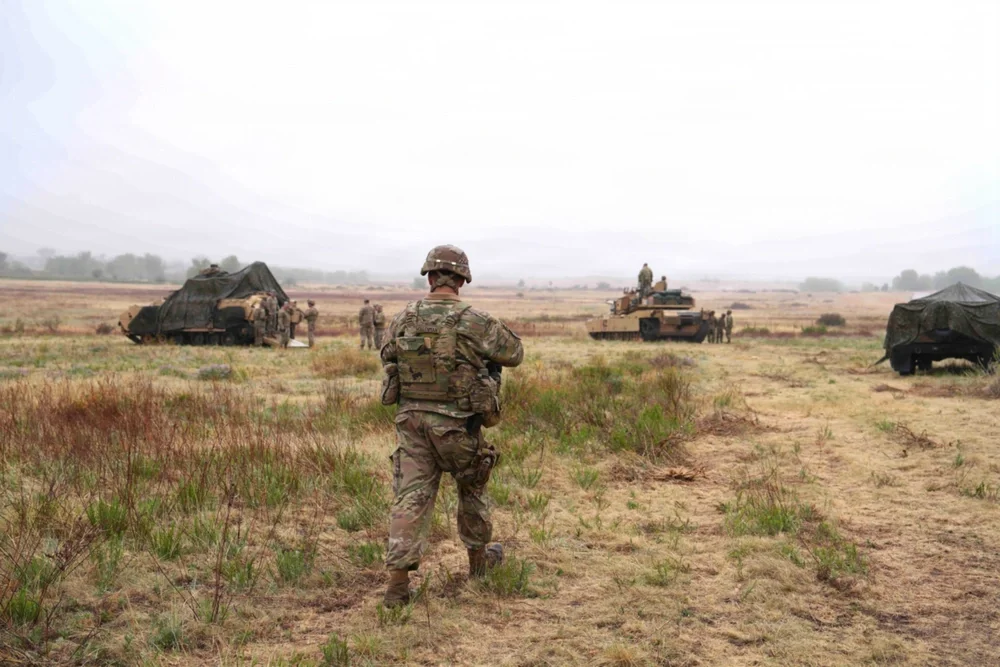
During Ivy Mass in May 2026, the 4th Infantry Division commander's Stryker served as a computing hub. Other vehicles could use applications hosted on hubs, carrying part of the headquarters' digital working environment into the formation. The Army's account of the exercise described command functions becoming less dependent on the location of a large command post.
Consider a hypothetical moment inside that arrangement. A battalion receives a fire request its commander already has authority to approve. Division sees the same request and tells the battalion to wait for a review. Greater visibility has given the senior staff an opportunity to pull a decision upward. The information arrived faster. The battalion is still waiting.
This is the authority problem inside Next Generation Command and Control, or NGC2. Common data can expand who can see. Orders and command relationships establish who can decide. ADP 6-0's mission-command principle supports subordinate decisions and decentralized execution appropriate to the situation. Division still has responsibilities that span its battalions. Distributing headquarters functions can support both levels, provided commanders distinguish decisions requiring higher coordination from those already entrusted to subordinates. A software permission cannot settle that distinction.
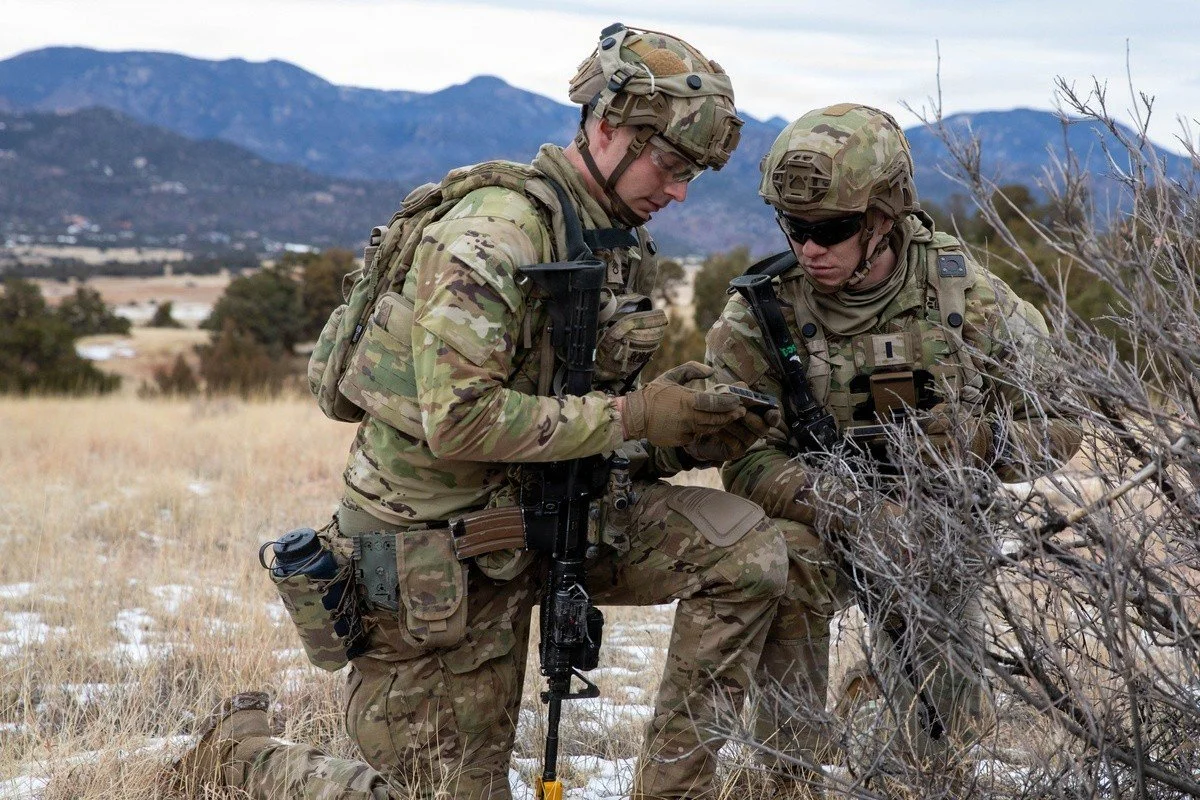
Staff Sgt. Cole Robbins of the 4th Squadron, 10th Cavalry Regiment, and 1st Lt. Samuel Myers, a platoon leader with the 1st Battalion, 68th Armor Regiment, review digital information on an Android Team Awareness Kit from a concealed position during Ivy Sting 4 at Fort Carson, Colorado, January 27, 2026.
Image: Spc. Samuel Brandon, U.S. Army
The experiments have become substantially more demanding. At Project Convergence Capstone 5 in March 2025, an armor battalion tested capabilities connected to higher headquarters nodes in a proof of principle. Ivy Sting 1 that September put the Artillery Execution Suite into live fires. By May 2026, Ivy Mass employed the NGC2 stack across two brigades and supporting elements, combining live opposition with a simulated division defense. The coordination burden had expanded well beyond the initial fires workflow. That same month, the 25th Infantry Division's Lightning Surge 3 during Balikatan connected activity in Hawaii, the continental United States and the Philippines, integrating sensor information with fires and airspace management.
After July's Project Convergence Capstone 6, the Army announced readiness to scale. Maj. Gen. Patrick Ellis, commanding general of the 4th Infantry Division, called the prototype “functional but not optimized.” Lt. Gen. Michael McCurry, the exercise director, described faster decisions within enduring fundamentals of how the Army fights. The next stage tests McCurry's claim in ordinary formations with different missions and support demands.
NGC2 separates applications, data, infrastructure and transport. Applications are the working tools, drawing on the data layer. Infrastructure supplies computing and storage beneath them, and transport carries information between locations. The architecture is designed for reuse. A fires report, for example, could inform sustainment without a staff member extracting it from one system and reentering it elsewhere. Users can work through different applications against compatible information. Shared access also makes the meaning of a record consequential. For example, ammunition on hand and ammunition available for issue can describe different quantities. A common repository is useful only if the applications and people consuming those records understand the distinction. Data architecture reaches into the staff's definitions and reporting practices.
The Army's June 22 announcement identified Anduril as lead for the common data baseline. Anduril partners with Palantir to provide an edge-to-cloud data mesh through Lattice and Foundry, with associated deployment tools. Its partnership with Raft covers data and services registries, transformation tools and federation. Anduril continues to lead implementation at the 4th Infantry Division, with Lockheed Martin leading at the 25th. Common components are intended to support formations that still need different applications and equipment.
The 25th Infantry Division's Lightning Surge 2 experimentation illustrates the practical change. The Artillery Execution Suite drew targeting information from the data layer for processing by the fire direction center and transmission to the guns. The Army described reducing manual transfers and retaining human decisions. Months earlier, at the 4th Infantry Division's Ivy Sting 2, the Army identified a constraint outside the application. Lt. Gen. Michelle Donahue, the Army's Deputy Chief of Staff, G-4, reported difficulty aligning the artillery resupply chain's speed with the Artillery Execution Suite. The division's operational problem extends through the resupply system. A shorter targeting timeline has limited value if ammunition availability cannot support the resulting demand.
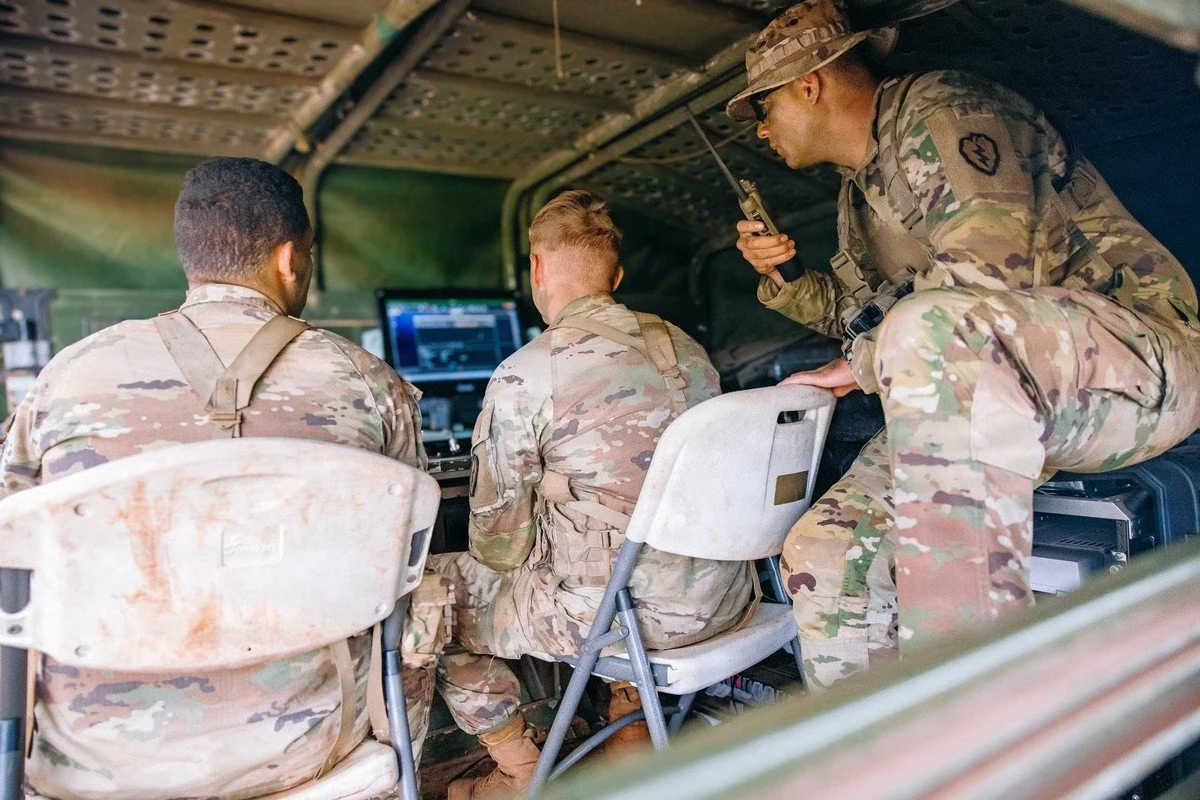
Soldiers with the 25th Infantry Division receive a fire mission at a battalion fire direction center during Lightning Surge 2 at Schofield Barracks, Hawaii, Feb. 24, 2026. The exercise supported the division’s experimentation with next-generation command-and-control systems.
Image: U.S. Army photo edited by Lt. Col. Hayden Howell
The headquarters is physically separating as these workflows change. At Ivy Mass, DefenseScoop observed staff officers coordinating across dispersed nodes through messaging and shared planning tools. Ellis described a division previously gathered around three large command-post nodes and their satellite connectivity. Army Doctrine Note 1-26, Employing Command and Control Nodes, published in January as an exploratory publication outside authenticated doctrine, describes headquarters elements assigned particular functions. It says command-post approaches used over the past 35 years are ‘suicidal’ under persistent observation, electromagnetic disruption and enemy fires. The staff is distributing work previously accomplished through routine physical proximity.
The useful unit of resilience is a staff function, such as maintaining an ammunition estimate. Link availability is one input to that work. After a node disconnects, its people need locally usable applications and sufficiently current records. They must recognize when their picture has aged and reconcile work completed against different versions of events when connectivity returns. The Army Test and Evaluation Command assessed both prototype data architectures from October 2025 through February 2026, including synchronization and operation across cloud and tactical environments under disrupted connectivity. At Ivy Mass, the C5ISR Center used an inline network-effects emulator to impose repeatable disruptions without radiating interference into commercial networks. These methods allow failures to be reproduced and corrections checked. Published accounts explain the testing more fully than they report how long particular staff functions remained usable or took to recover.
The physical equipment presented immediate problems. After four days observing PC-C6, DefenseScoop reported overheating hardware and intermittent connections. Soldiers also described applications missing information they needed. Ellis acknowledged heat-related shortcomings and described soldiers keeping antennas working by draping them with T-shirts soaked in ice water. A service running elsewhere on the network offers little help to the soldier whose terminal or antenna has stopped working. These were observed limits in the prototype's field use, with direct consequences for access at the point of decision.
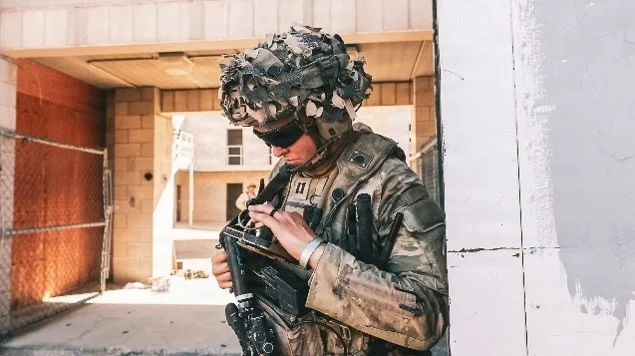
Capt. Alex Bayer, a mechanized infantry company commander in the 4th Infantry Division, coordinates with her unit on an NGC2 end-user device during Project Convergence Capstone 6 at Fort Irwin, California, July 24, 2026.
Image: Sgt. Nathan Arellano Tlaczani, U.S. Army / DVIDS
Dispersion also distributes the support workload. The doctrine note acknowledges added sustainment and communications demands. Smaller teams have to maintain continuity through movement and personnel losses. Transport choices introduce their own judgment. Ellis described commanders selecting communications options according to battlefield risk. A higher-capacity connection may carry an exposure or support burden the commander cannot accept. Resilience depends on the formation's ability to keep essential work going with the people and equipment it can sustain, including the labor required to keep separated sites supplied.
Data access creates institutional work of its own. The Army Data Operations Center pilot began April 3 under Army Cyber Command to help formations resolve connections and access problems. Its director, Brig. Gen. Michael Kaloostian, described a 4th Infantry Division exercise in which latency involving the Army Intel Data Platform disrupted targeting information. Unit personnel had spent time investigating the problem. The center was intended to give them someone to call.
On the announced 180-day timetable, the pilot reaches its endpoint around September 30, a week after this article's date. DefenseScoop reported that the Army will decide by October 1 whether the center continues, and that Kaloostian expects it to stay lean, relying on automation to absorb a growing workload. If the center falls behind as NGC2 spreads, the troubleshooting returns to division data teams.
Software will also shape which information reaches commanders' attention. In August, Army acquisition official Joseph Welch told Breaking Defense that Striveworks would build the corps-level AI layer, covering the model registry and validation as well as deployment and monitoring. This creates a concrete place where decisions about model suitability become decisions about the tools available across formations. For an illustrative sustainment application, a model could rank resupply requests and leave a unit with a missing report out of its queue. A staff beginning with that ranking would inherit the omission. Model governance and visible uncertainty therefore affect the quality of human judgment, even when a person retains the final approval.
The Army's Application Store and Pipeline is intended to integrate applications and automate security validation. Earlier experience shows why that remains continuing work. In October 2025, Breaking Defense reported a September Army memorandum identifying cybersecurity deficiencies involving access governance and third-party software. Army officials said the risks had been mitigated. Each subsequent release creates a fresh requirement to establish which code and permissions a unit is using, alongside the operational gains promised by the update.
Dependence on suppliers now has an enterprise scale. In March 2026, the Army awarded Anduril an enterprise contract with a potential ten-year duration and a ceiling of $20 billion. The term comprises a five-year base and a five-year optional ordering period. It followed the July 2025 Palantir enterprise agreement, capped at $10 billion over up to ten years and consolidating 75 contracts. Both figures describe maximum potential purchasing, with obligations determined separately. The Anduril contract reaches well beyond NGC2, but DefenseScoop reported that the June baseline decision was made under it.
Consolidation gives the Army a common purchasing framework. Operational flexibility depends on whether units can retain usable data and introduce another application without extensive reworking by the incumbent supplier. An open interface has practical value when a replacement tool can perform the required task with the existing records. The relevant evidence would be a demonstrated substitution and its support burden. That burden includes preserving permissions and existing workflows as the software changes. Otherwise, the formation can become dependent on the vendor's integration team to make a routine change. In May, an Army caption from a Fort Carson degraded-network rehearsal credited industry partners with the expertise to troubleshoot and maintain communications. That suits prototyping. If routine integration or recovery still depends on vendor engineers as fielding scales, a division will have to account for where that expertise sits when links degrade.
Fielding is already proceeding in layers. On September 18, the Army reported a modernized transport and infrastructure baseline for III Armored Corps, accompanied by training and divestment of legacy Warfighter Information Network-Tactical equipment. This delivers part of the foundation for NGC2. I Corps faces a broader integration effort. In a Breaking Defense interview published September 11, its commander, Lt. Gen. Matthew McFarlane, said a software rollout would begin in October. He said he intends to give subordinate divisions and brigades freedom of action through a data architecture driven by decentralized mission command. Joint and multinational interoperability also figured prominently in his account of corps requirements in the Pacific.
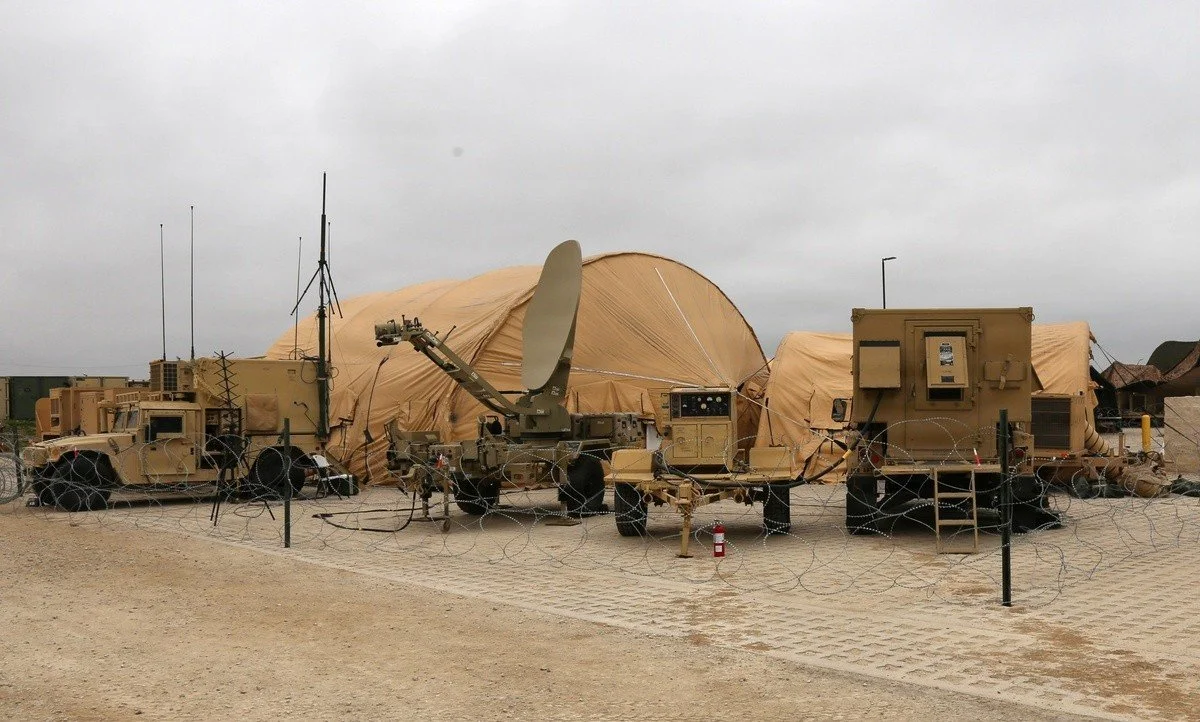
Before: III Armored Corps operates legacy Warfighter Information Network-Tactical equipment during a Warfighter exercise at Fort Hood, Texas, April 18, 2023.
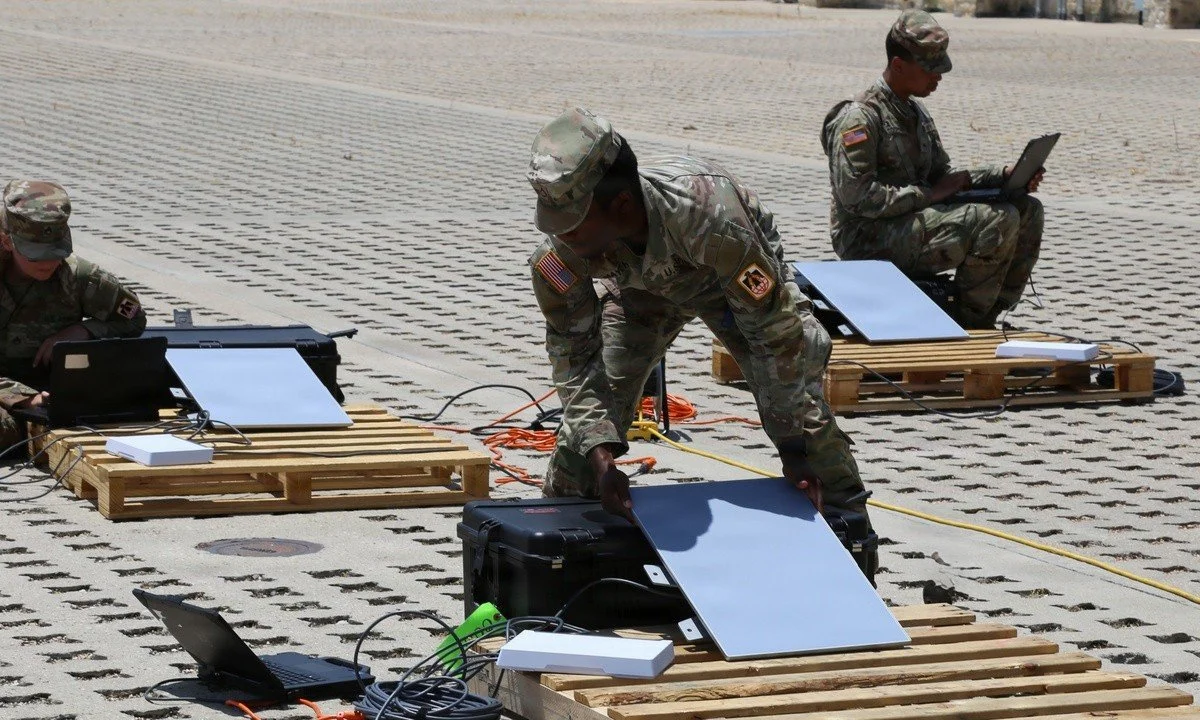
After: Soldiers from the 57th Expeditionary Signal Battalion-Enhanced, which supports III Armored Corps, train on low-earth-orbit satellite terminals from the Army's new command-and-control network baseline at Fort Hood, Texas, August 6, 2026.
Image: U.S. Army
The transition will involve mixed systems. During Lightning Surge 2, the 25th Infantry Division also tested AFATDS compatibility through the data layer to preserve connections with joint partners. The Advanced Field Artillery Tactical Data System remains relevant as the Army experiments with its intended successor. GAO likewise describes C2 Fix's commercial common-operating-picture software as a bridge pending NGC2 fielding. A unit's modernization date will rarely be the same as every partner's.
The August 2026 GAO report records a tentative goal of equipping 11 divisions and four corps with the full stack by the end of FY2032. It recommends a detailed schedule identifying units by fiscal year and an initial life-cycle cost estimate for the collective effort, both regularly reassessed. The department concurred. Table 3 identifies $3.308 billion in requested FY2026 funding across the four layers. The longer-term cost of fielding and supporting the force remained undetermined. Those gaps leave formations uncertain about the duration and support demands of the transition.
The next evidence needs to connect the architecture to the work. ATEC's continuing evaluation at PC-C6 provides a mechanism for doing that. Useful results would track the completion and recovery of critical staff functions under disruption, then account for the technical assistance needed to achieve them. A formation supported by embedded developers can resolve problems that another unit must carry into its next training cycle. Comparing those support conditions is part of judging whether a workflow will scale. Alongside those measures belongs a record of approval traffic, showing which decisions stayed with the responsible subordinate and which moved upward.
Return to the hypothetical battalion. Division's intervention is useful if it supplies information or coordination beyond the battalion's view. If the senior staff simply repeats an approval already delegated, the new system has added another checkpoint. Moving authority across the force means resolving that distinction in orders and in the habits of staff work. The decision about who can act has to survive the arrival of a better screen.
TAGGED: Warfighter Modernization, NGC2, Command and Control, Mission Command, Data Architecture, Army Modernization
-

ANDRES CARDENAS | Lead Analyst
Modern Warfighter Defense Publication
/ STAY CONNECTED /