BEYOND HELLFIRE:
ROTARY-WING STRIKE AND THE SHIFT AWAY FROM PROXIMITY
ANDRES CARDENAS
May 28, 2026 | 6 min read
For decades, rotary-wing precision strike has been defined by proximity. Systems such as the AGM-114 Hellfire shaped how attack helicopters were employed, requiring aircraft to operate within relatively short engagement envelopes in order to generate effects. That model placed rotary-wing platforms close to contested airspace, relying on maneuver, terrain masking, and tactical coordination to balance lethality with survivability. The geometry of rotary-wing combat was therefore built around distance constraints as much as platform capability.
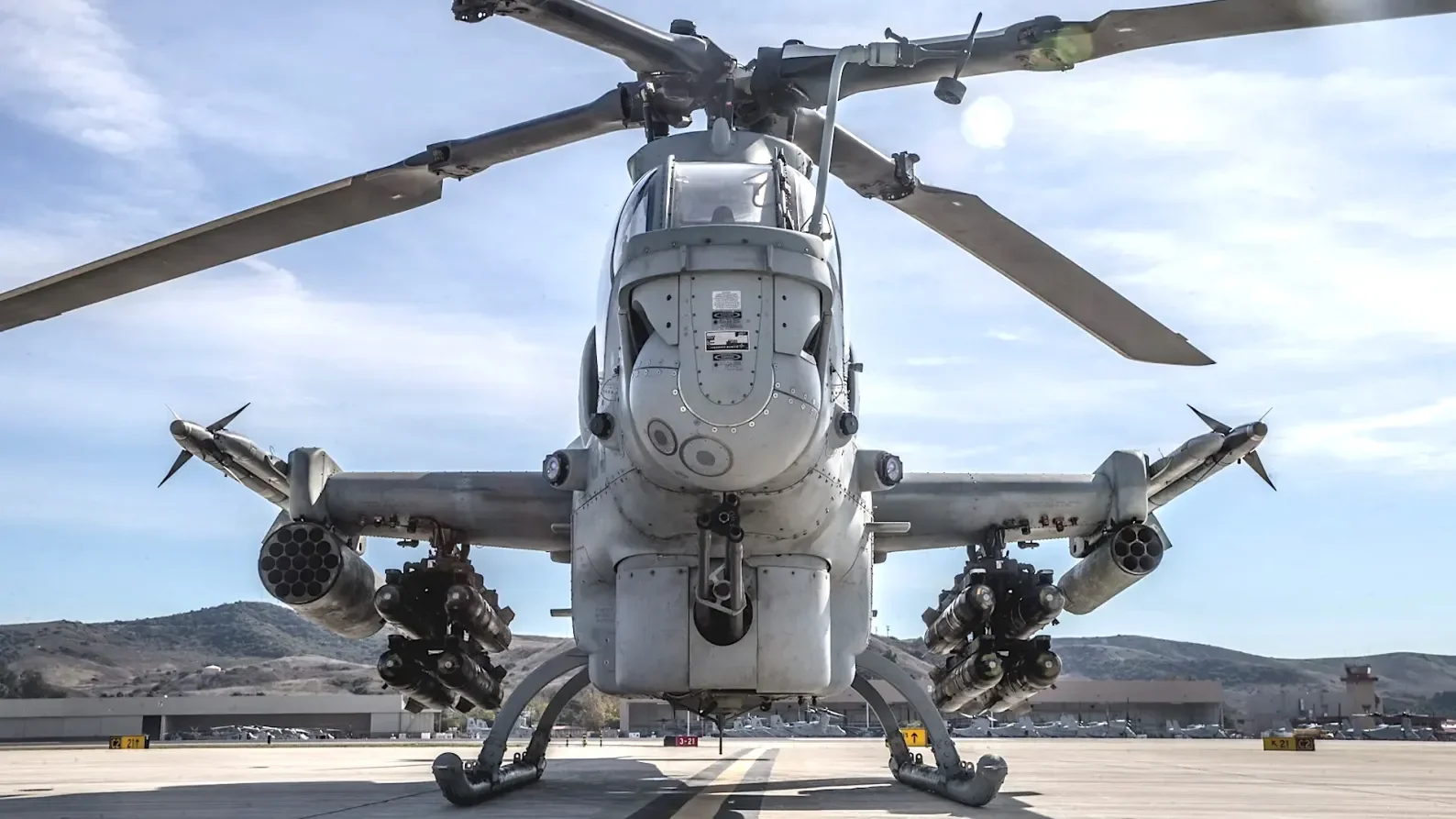
AH-1Z Viper configured for close-range precision strike. Rotary-wing employment during the Hellfire era emphasized proximity to contested airspace.
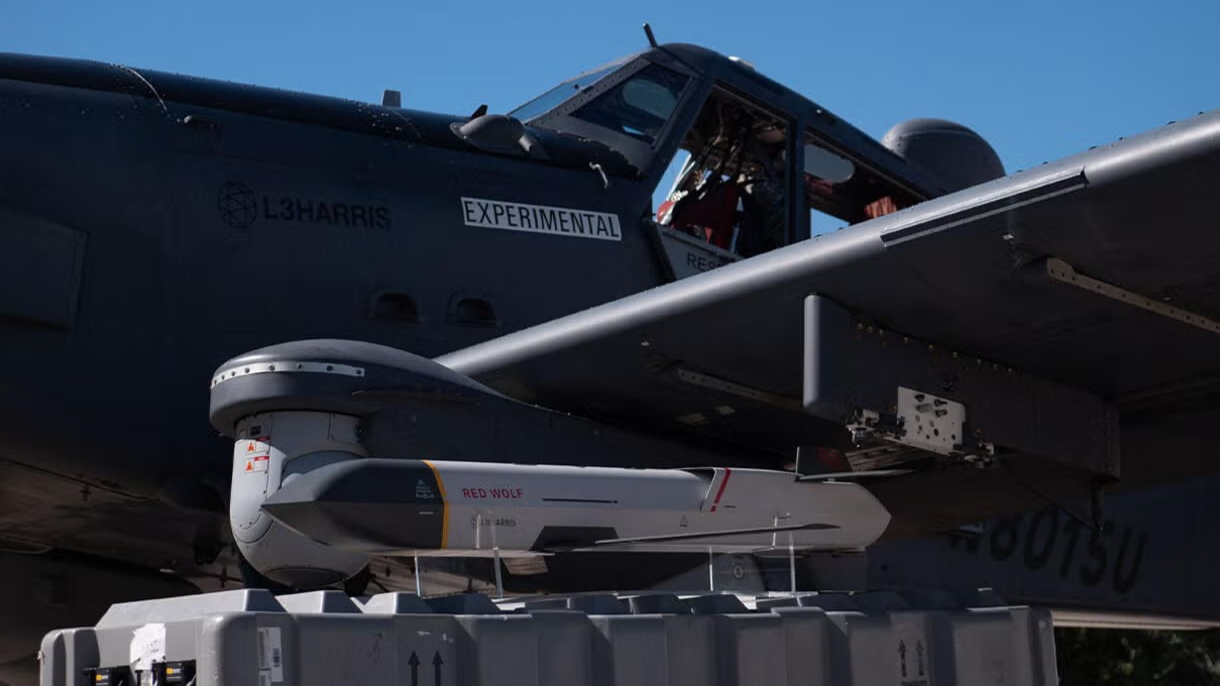
The Marine Corps’ recent investment in extended-range rotary-wing strike suggests that geometry is evolving. L3Harris has secured an $86.2 million contract from U.S. Naval Air Systems Command to support the Precision Attack Strike Munition program, centered on the company’s Red Wolf long-range strike vehicle. The award covers development, testing, and early production, with work extending through fiscal 2027. While modest in size compared to major aircraft procurement programs, the funding signals a directional shift in how rotary-wing aviation is expected to contribute to future operations.
The traditional proximity-based model functioned effectively in permissive and semi-permissive environments where air superiority limited exposure. In a contested battlespace defined by layered air defenses, expanded detection networks, and long-range fires, that model becomes increasingly restrictive. Platforms that must close distance to remain relevant absorb greater operational risk. Extending strike reach alters that equation by expanding the space between platform and threat, enabling rotary-wing assets to contribute effects without operating at the edge of survivable airspace.
This shift aligns closely with distributed maritime operations and expeditionary advanced base concepts, both of which emphasize dispersed forces generating effects across wider geographic areas. Under such concepts, small, distributed units require the ability to influence the battlespace without massing platforms in vulnerable positions. An extended-range strike capability mounted on rotary-wing aircraft allows those platforms to operate as nodes within a broader, networked fires architecture rather than as proximity-dependent support assets.
The significance of the $86.2 million award lies not in its size but in its signal. It reflects capital being directed toward expanding engagement depth for platforms historically constrained by range. When acquisition dollars begin reinforcing stand-off capability inside communities long defined by close-in employment, it suggests a structural recalibration of force design priorities. Hellfire defined an era of rotary-wing proximity strike. The current investment indicates that the next phase may be defined by distance, integration, and survivable reach. As the modern warfighter operates within increasingly compressed and contested environments, expanding engagement space becomes less an enhancement and more a necessity.