
The Lakota After the Cockpit
September 23, 2026
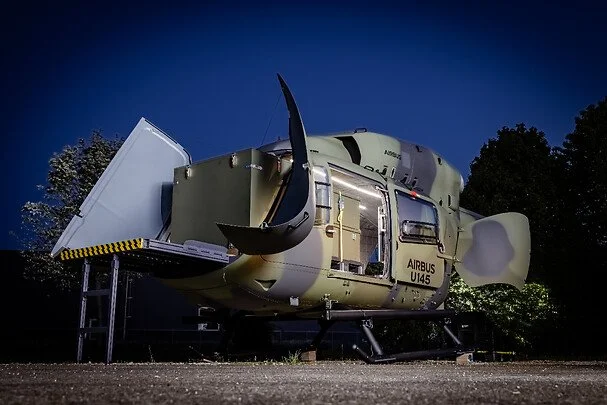
The U145’s most revealing feature is its nose. Announced on June 8, Airbus Helicopters’ mock-up for ILA Berlin replaces the H145’s cockpit with cargo access, including a loading door and folding table.
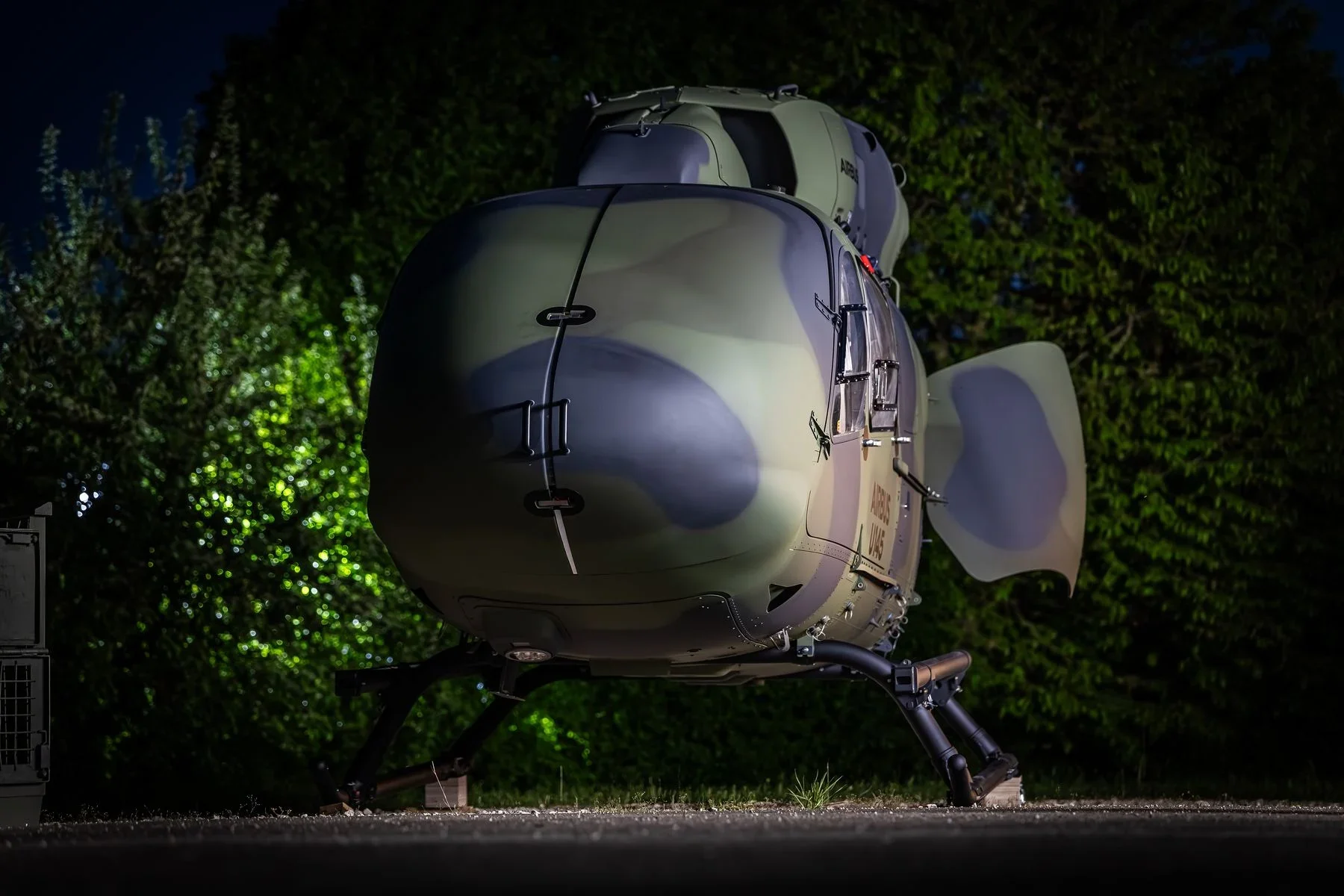
U145 mock-up with the cockpit replaced by forward cargo access.
Image: Airbus Helicopters
Much of a helicopter delivery happens outside the cockpit. Marines unload the cargo and planners set priorities with or without a pilot aboard. The crew’s own work is narrower. Pilots observe the landing area on approach and coordinate with the ground party. They also manage failures and adapt when conditions depart from the plan.
Each of those functions has to be automated, eliminated or assigned somewhere else. The H145 and Lakota autonomy efforts are beginning to redesign the aircraft around that transfer. Their operational value depends on what the force gains from an empty cockpit and on where the crew’s work lands.
ONE FAMILY, SEPARATE DEVELOPMENTS
The UH-72 is already an established military aircraft family in service. The Army flies the crewed Lakota in utility roles, and the later UH-72B required its own operator and maintainer training. That operating experience gives an autonomous derivative a real aircraft and support base to build on.
MQ-72C Lakota Connector is Airbus U.S. Space & Defense’s development for the Marine Corps’ Aerial Logistics Connector effort, and its flight work has used an H145 testbed. U145 is Airbus Helicopters’ separately announced uncrewed derivative. Airbus identifies MQ-72C as a dedicated U.S. development, and a spokesperson told Breaking Defense that U145 was not developed for a particular national or European acquisition. The two share a lineage and a design problem, with separate acquisition paths and test records.
THE REQUIREMENT COMES FROM DISPERSION
Lt. Col. Ben Link, who heads vertical takeoff and landing concepts for the Marines’ Cunningham Group, described ALC’s mission in April as “autonomous airborne logistics to sustain the stand-in force.” The service is pursuing ALC alongside MARV-EL, a similarly sized autonomous logistics aircraft.
A force dispersed across separated positions creates more delivery points and more opportunities for a broken link to interrupt resupply. An autonomous helicopter could make some of those deliveries without exposing an onboard crew. That matters most when the load is important enough to move immediately but the route or destination makes committing people to the aircraft costly. An uncrewed sortie can also release a crewed aircraft for other missions.
Airbus is one of two prime vendors. Near Earth Autonomy, the other, flew a Leonardo AW139 autonomously for the program in 2025, and Sikorsky demonstrated an optionally piloted Black Hawk to inform it. In April, Col. Richard Rusnok, branch head of Marine Aviation’s Cunningham Group, told Defense Daily the service was keeping open whether to proceed with one vendor or several in the next phase, with a decision to support fielding likely within the next couple of years. Airbus told the same outlet it is targeting production-ready capability as early as 2028. That is a company target. The vendor decision belongs to the Marines.
THE EVIDENCE CHANGES AT THE LANDING ZONE
The test record has moved from cargo trials to the landing zone, where the aircraft makes decisions a pilot used to make. ALC runs on the Middle Tier of Acquisition rapid prototyping pathway, and Airbus’s Phase I award was an other-transaction agreement through the Naval Aviation Systems Consortium.
Dates identify announcements or reports unless a flight month is specified. Planned events remain separate from completed activity.
The flight results are almost entirely contractor reports. Airbus’s initial release describes Hivemind working with Helionix on an H145, and an Airbus interview with Vertical confirms pilots were aboard. The published record confirms pilots aboard the August 2025 autonomous flight. It does not establish the crew status of every accumulated test hour. The reviewed public record does not provide intervention frequency or failure rates.
THE REDESIGN HAS ALREADY STARTED
In 2024, Airbus told Defense News that its unmanned Lakota would be built for autonomous operation. By March 2026, the company described a low-fidelity UH-72A demonstrator with clamshell nose doors and a cargo floor fitted with rollers and locks. The autonomy flights so far have used a separate H145 testbed.
Airbus’s H145M program manager, Constance Pinsdorf, described the trade in September. Removing the cockpit frees the aircraft for 360-degree access to the cargo compartment and a completely flat floor that lets boxes be secured. Removing the pilot creates new work inside the aircraft. Dedicated electromechanical actuation has to replace the pilot’s arms and legs, and additional sensors have to replace the pilot’s eyes at low altitude. The September Airbus account does not provide weight or reliability figures for that equipment.
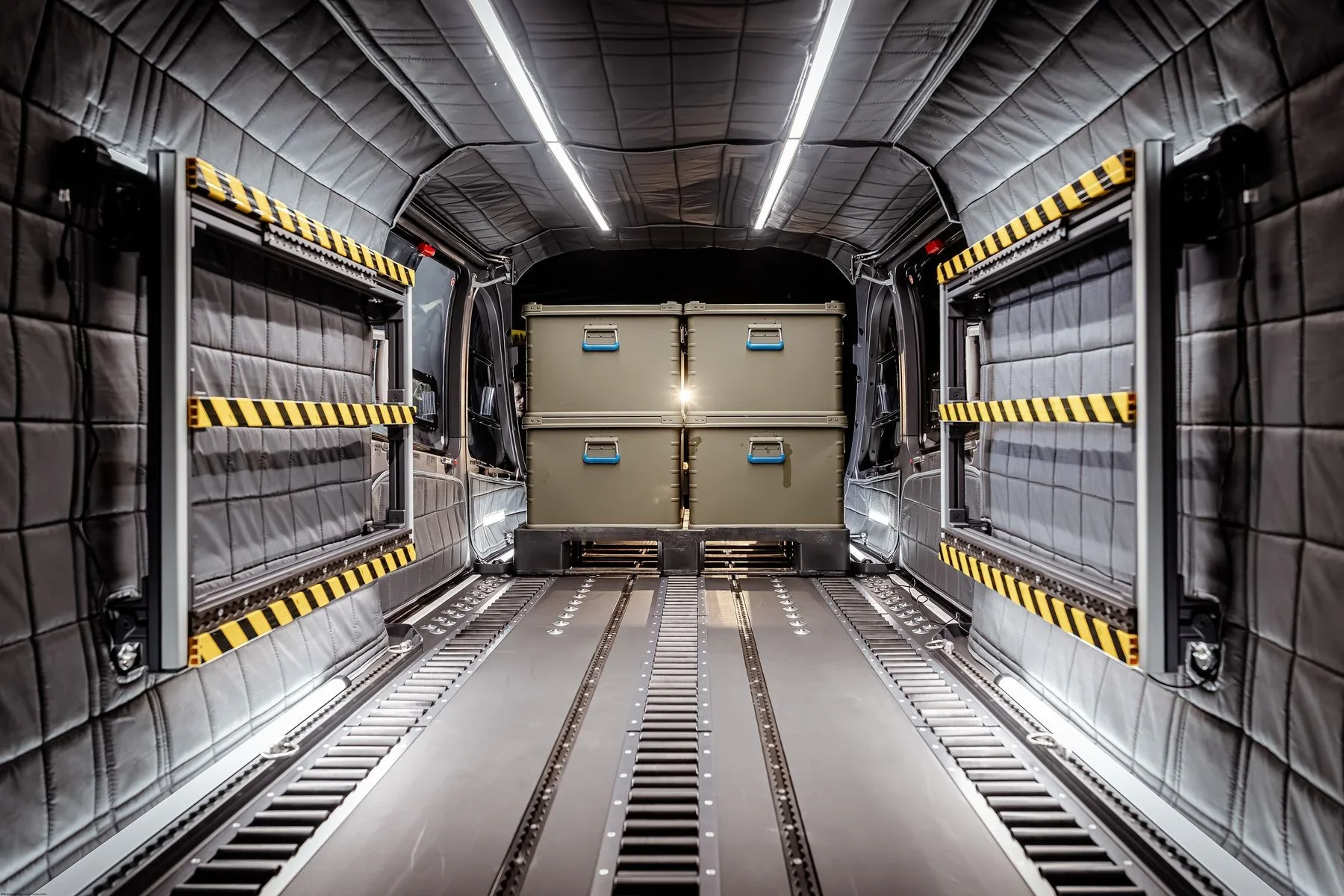
U145 cargo compartment with the cockpit removed and the floor opened for cargo handling.
The U.S. program carries the same requirement. It involves replacing the H145 D3’s traditional flight controls with full fly-by-wire, and Airbus reported more than 70 autonomous flight hours while still listing full fly-by-wire implementation among the program’s next steps. Accumulated autonomy testing and the intended control configuration are therefore separate milestones.
A wider opening and a flat floor can shorten the time a receiving party spends beside the aircraft, depending on the cargo and the handling equipment at the destination. Airbus lists Joint Modular Intermodal Containers and ordnance containers among MQ-72C’s intended loads. The reviewed public record does not establish how many Marines it takes to move one clear, or whether unloading with the rotor turning is safe enough to adopt.
THE FLIGHT SOFTWARE NEEDS A COMPLETE SYSTEM
Helionix already provides avionics and a four-axis autopilot. Hivemind adds the mission-autonomy functions being tested with it. Calling the whole combination an AI pilot hides the integration work between deciding what to do and controlling the aircraft through the maneuver.
L3Harris supplies the digital backbone and mission-system integration, including command-and-control nodes. Parry Labs supplies STRATIA software infrastructure and onboard computing. Its announced scope also covers ground-control interfaces, including MAGTAB integration. In the fourth test period, Parry’s onboard computing supported perception processing and real-time decisions, according to the joint test account.
In the April test, onboard perception supported an autonomous response to obstacles. Communications remain a separate requirement. Operators need to change missions and confirm deliveries, and the partner releases reviewed do not describe the radio architecture or its performance under jamming or link loss.
Open interfaces make new integration possible without making it automatically safe. A software update that improves one function has to preserve safe behavior across the integrated aircraft. Integrating four companies’ equipment is progress, and each later change will need its own safety case.
A CLEAR LANDING AREA IS ONLY PART OF A USABLE DESTINATION
Airbus reports that the fourth test period enabled the H145 to evaluate a landing zone and divert when it detected obstacles. Janes’ account of a Shield AI-provided video describes staged approaches to an empty helipad and then obstacles of different sizes, viewed from different positions. Airbus told Defense One that objects extended down to a Pelican case, with smaller, more representative objects next. Brownout and moving personnel are harder cases. The reviewed public accounts for the H145/MQ-72C test series do not describe testing either condition.
Suppose an aircraft arrives with ammunition and finds its designated landing area obstructed. Its software rejects the approach. An alternate area is physically clear, but it lies beyond the receiving unit’s secure position. Reaching the aircraft there would expose the Marines collecting the load.
The aircraft has solved a flight-safety problem. Completing the delivery requires a decision about Marines on the ground. A commander could approve alternates before launch, or a remote supervisor could obtain approval during the mission. Failing both, the aircraft could return with its cargo. Each option requires defined authority and enough information to exercise it.
The Marine Corps has drawn an organizational line for now. Link described ALC as general support to the MAGTF, owned and operated by aviation, distinct from ground-owned MARV-EL. Requesting support and authorizing a change to the aircraft’s mission are separate functions.
Lost communications make advance delegation more important. The aircraft needs permitted actions when the ground cannot answer, and the receiving unit needs to know them. A diversion can be safe for the aircraft and still fail the Marines if the cargo lands where they cannot reach it.
THE BURDEN LEFT ON THE GROUND
Airbus advertises more than 350 nautical miles of range and an 8,378-pound maximum takeoff weight for MQ-72C. Neither figure is a payload at combat radius. Reserve fuel and a diversion allowance come out of the same weight limit as the cargo.
The Marine Corps has flown uncrewed resupply before. Two K-MAX helicopters operated in Afghanistan from late 2011 to 2014, moving more than 4.5 million pounds of cargo by Lockheed Martin’s count and reducing the need for truck convoys on IED-threatened roads. Marine air vehicle operators were positioned at forward bases, while Lockheed contractors supported operation and maintenance. One K-MAX crashed in June 2013. The circumstances had not been publicly disclosed when the aircraft returned home in 2014. K-MAX carried external loads and could release cargo without landing. MQ-72C carries cargo internally, which changes the receiving problem. The aircraft has to land, and someone has to approach it.
The measure is cargo delivered to Marines within the required time. Receiving parties already unload crewed helicopters. The added work begins at the approach, where an aircrew would see the ground party and signal when to come in. The published record does not establish whether software or a remote operator assumes that role. After landing, a crew would also catch damage or a developing fault before the next sortie. Without one, that check has to be assigned.
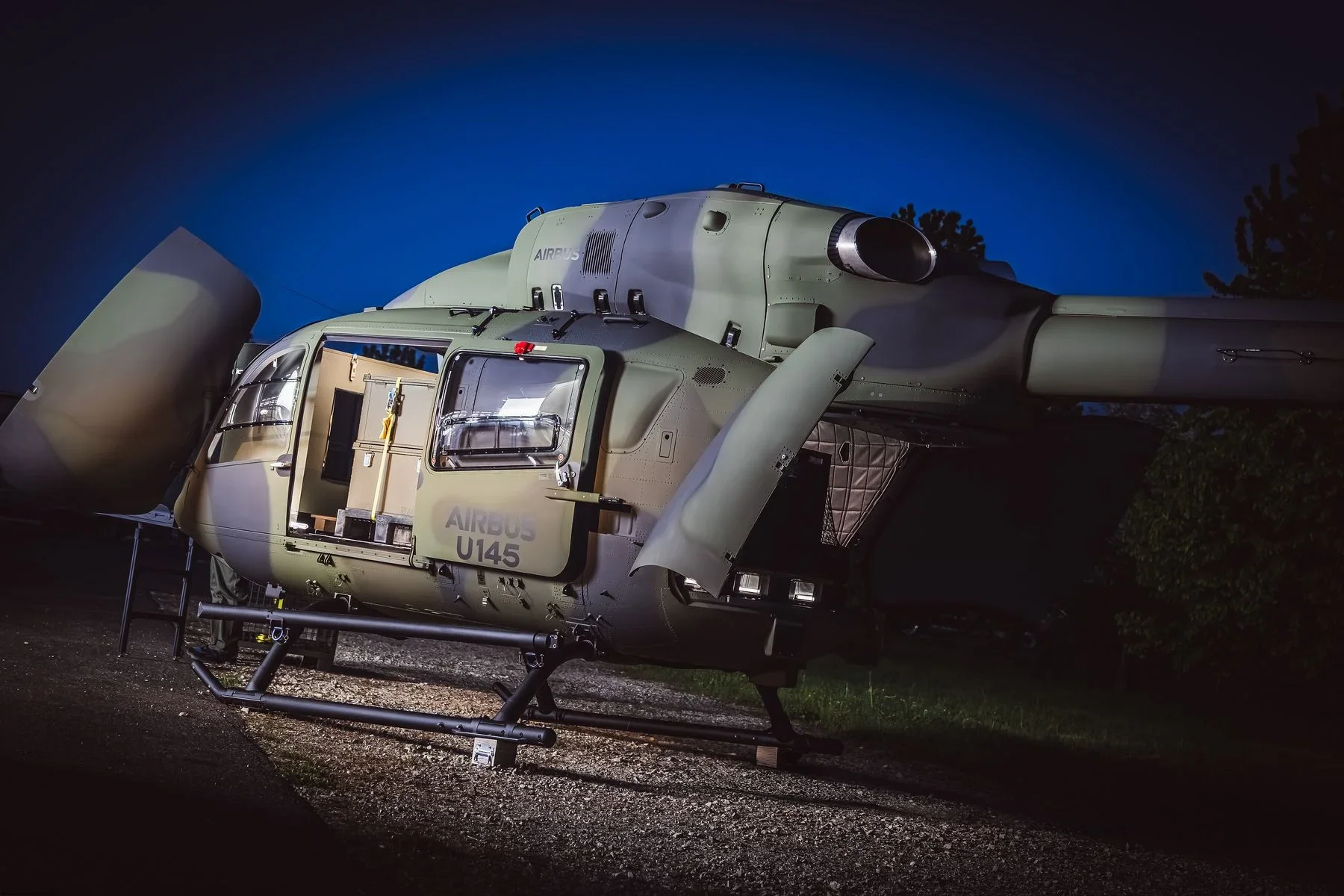
U145 mock-up with the forward cargo opening and side access exposed.
The mature airframe is an advantage. The Lakota fleet has contracted parts and engineering support that a new aircraft would have to build. The Army’s use of the type is shifting, with initial pilot training moving to contractor-owned aircraft under Flight School Next and an order for 10 more UH-72Bs announced in August.
Expeditionary use has to show that support can reach dispersed aircraft without a large detachment at each site. The Marine Corps has not published a sustainment model for ALC. The K-MAX experience relied on contractor maintenance with Marine assistance. Inside an adversary’s weapons range, the service still has to decide whether Marines or contractors repair a failed actuator or sensor at an expeditionary base, and how that support gets there.
Losing an uncrewed aircraft does not put aviators at risk, but it can still destroy scarce cargo and disrupt a unit’s next operation. An affordability case has to count replacement aircraft and missed deliveries. Neither a unit price nor a support model has been published.
THE NEXT TEST BELONGS TO THE FORCE
Airbus’s September U145 interview describes intermediate configurations with a safety pilot as an easier way to meet safety regulations over urban areas. Approval for an aircraft without a pilot will rest on its own evidence.
The Marine Corps’ 2027 demonstration has limits Link acknowledged. The service wants at least two optionally piloted aircraft, one from each prime vendor, for a littoral regiment in the Pacific, and he said they will very likely fall short of the full autonomy planned by the end of the Middle Tier effort, now two years into five. The demonstration can measure the delivery process and the receiving unit’s workload. Full autonomous operation remains a later objective.
Repeated deliveries with the ground work included will settle the question. How long is the receiving unit exposed, and how many people does each delivery require? Can the system recover from a blocked landing area without pushing every exception to a console operator doing pilot-equivalent work?
Protecting aircrew is the clearest gain. Replacing a crewed lift sortie can also free that aircraft for another mission. On current evidence, the receiving unit may pay for those gains with the approach check and a share of the decision on alternate landing areas. That trade may be worth accepting when the alternative is putting an aircrew into the same threat.
The receiving unit should not have to become an aviation support detachment to collect its next load.
TAGGED: Autonomy and Control, UH-72 Lakota, H145, MQ-72C Lakota Connector, U145, Aerial Logistics Connector, Contested Logistics
-

ANDRES CARDENAS | Lead Analyst
Modern Warfighter Defense Publication
/ STAY CONNECTED /