
Congress Passed Two Different F-14 Bills. Nobody Has Noticed.
A narrow F-14 Tomcat preservation bill has become a larger fight over whether legacy aircraft should be monuments, machines, or destroyed outright.
May 9, 2026 | 8 min read
MODERN WARFIGHTER (APRIL 28, 2026) — Congress has advanced two different versions of the Maverick Act, and the difference could decide whether the last surviving F-14 Tomcats become monuments or machines.
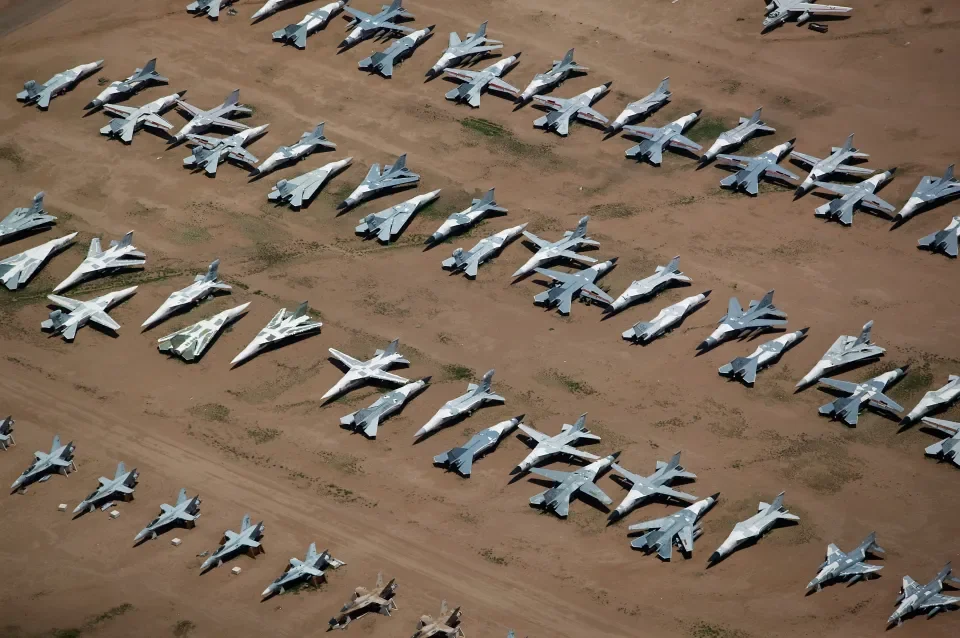
For nearly twenty years, the Navy treated the F-14 Tomcat like a security liability instead of a retired fighter. After the aircraft left service in 2006, the fleet wasn't stored for preservation. It was marked for elimination. Retired Tomcats were systematically cut apart into two-foot-by-two-foot sections, stripped for controlled disposal, and erased from the inventory piece by piece.
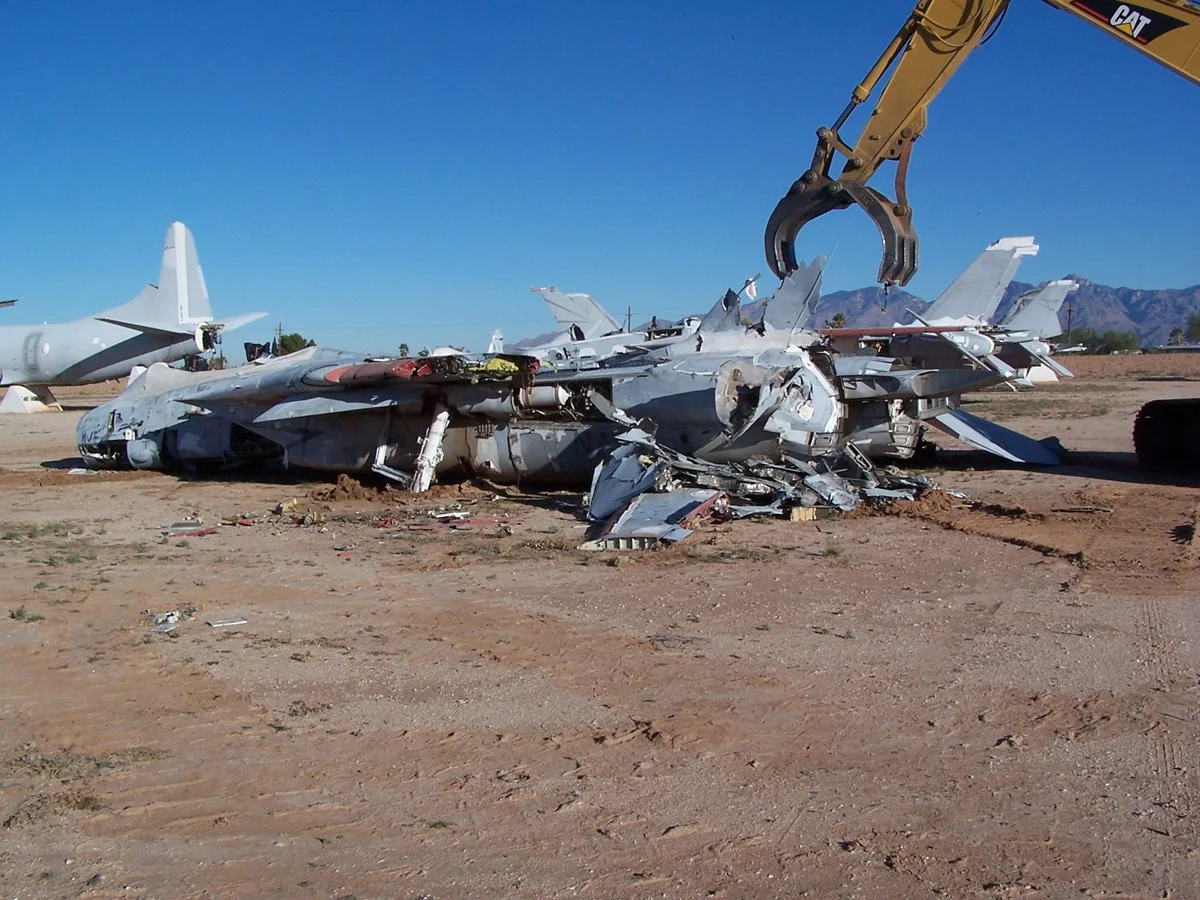
An F-14 Tomcat being dismantled by heavy equipment at Davis-Monthan Air Force Base under the post-retirement F-14 destruction program mandated by the FY2008 NDAA.
The policy was driven by one concern: Iran. Tehran had operated American-built F-14s since the Shah's era, and every retired U.S. airframe represented a potential spare-parts pipeline through the gray-market procurement networks that American intelligence had spent years trying to shut down. Investigators had already uncovered attempts to move Tomcat components through illicit channels, and Congress responded accordingly.
The FY2008 National Defense Authorization Act turned the destruction mandate into law, transforming Davis-Monthan from a storage site into the place where the Tomcat was methodically prevented from becoming useful to anyone else.
Now Congress wants to recover three of those aircraft from the destruction pipeline, a narrow legislative reversal that says far more about the country's relationship with retired military hardware than the bill's modest scope initially suggests. The Maverick Act of 2026, introduced in the House by Rep. Abe Hamadeh (R-AZ) and advanced through the Senate on unanimous consent April 28, would transfer Bureau Numbers 164341, 164602, and 159437 to the U.S. Space & Rocket Center in Huntsville, Alabama. The aircraft would remain demilitarized. At first glance, the legislation reads like a preservation measure aimed at saving a handful of historic aircraft from permanent destruction.
The bill's name reveals the politics surrounding it. "Maverick Act" is a Top Gun reference embedded into federal statute, a signal that the legislation was designed to travel outside committee rooms and congressional archives. That strategy has worked exactly as intended. The bill generated an immediate wave of headlines centered on one idea: the F-14 might fly again. What most of that coverage missed is that Congress advanced two materially different versions of the same bill. The House and Senate texts point toward different outcomes for the Tomcat. One preserves the aircraft as static monuments. The other leaves open the possibility of an operational heritage aircraft returning to the air for the first time since 2006.
That distinction matters because it transforms the Maverick Act from a museum bill into something larger: a policy argument over what retired American military hardware is actually for once it leaves operational service.
The Two Bills Are Different
The House version keeps the F-14s grounded. Transfer is authorized only if the aircraft have no combat capability, remain demilitarized, and stay inside U.S. control. Three Tomcats become static museum pieces: preserved, controlled, and permanently grounded.
The Senate version requires the Navy to provide excess spare parts sufficient to make one of the three F-14Ds flyable. Not as a weapon. As a heritage aircraft operating under FAA certification and tight limits at airshows and commemorative events.
That single provision changes the legislation entirely and creates a complicated certification challenge for the FAA. The agency has approved other ex-military aircraft for civilian operation, but the F-14 presents a combination the FAA has never had to confront before: a variable-geometry supersonic fighter with classified systems history whose support infrastructure was deliberately dismantled by the same government now attempting to return it to flight. It is not a routine process, and it has no guaranteed timeline. The House bill treats the Tomcat as an artifact. The Senate bill treats it as a machine with a second life and assumes the regulatory infrastructure exists to make that possible.
Those are different commitments, and the conference process will ultimately decide which version Congress actually intends to support. The distinction matters because it determines what Congress is asking the Navy to sustain and whether the legislation ultimately centers on preservation or demonstration. Right now the bill is trying to satisfy both visions simultaneously, which is another way of saying it still has not fully decided what it wants to become.
The deeper question is simple: what is a demilitarized warplane for? If the answer is static display and education, the House bill is sufficient, and the Senate version becomes overreach. If the answer is living heritage, public demonstration, recruitment value, and the sight of a Tomcat airborne for the first time since 2006, then the Senate bill becomes the more direct version because it funds the ambition it implies. The conference process is where that ambiguity either resolves or hardens into a compromise that satisfies neither objective particularly well.
The Unspoken Predicate: Iran
The original destruction policy existed for one reason: Iran. For decades, Tehran operated American-built F-14s and ran illicit procurement networks searching for spare parts. Every surviving U.S. Tomcat represented a potential supply depot for an adversary. The destruction campaign wasn’t symbolic. It was supply-chain denial, methodical and written into law, designed to ensure retired American F-14s could never sustain Iran's remaining fleet.
That rationale has weakened dramatically. Iranian F-14 numbers had already dwindled to near-single digits before March 2026, when Israeli strikes on the 8th Tactical Air Base at Isfahan destroyed a significant portion of what remained. By 2024, a single Tomcat appeared at the Kish Air Show. The fleet that justified twenty years of American airframe destruction is functionally gone.
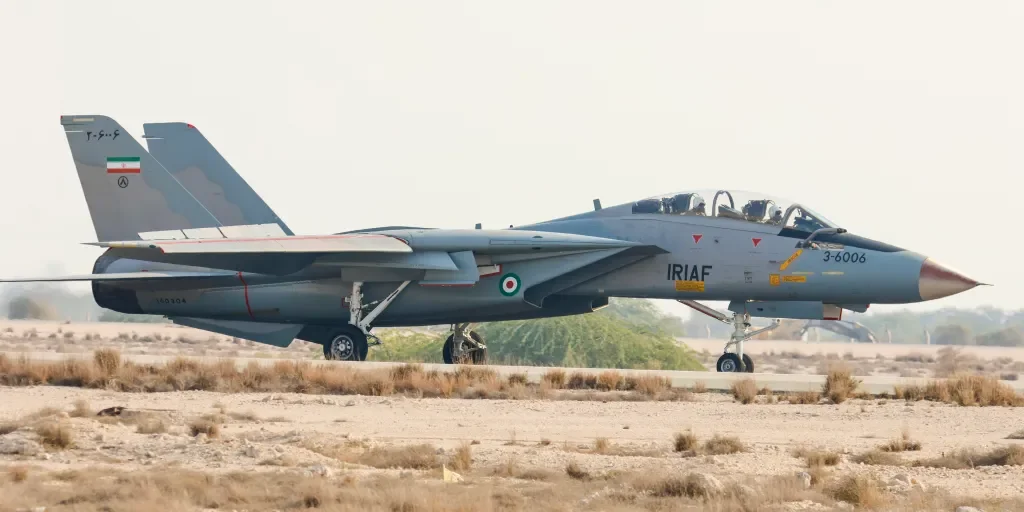
An Iranian F-14 Tomcat at Kish Island. Iran’s remaining Tomcat fleet was the central reason U.S. retired F-14s were destroyed instead of preserved.
The Maverick Act's sponsors have not said this publicly. They likely do not need to, and saying it openly would invite complications the bill does not require. But the security architecture of the legislation still reflects the older threat environment through demilitarization requirements, foreign transfer prohibitions, and reverter clauses returning ownership to the United States if any condition is violated. Congress is responding to a changed environment, even if the bill never says so directly. What it implies is clear: the original rationale for destruction has largely expired. Whether the House Armed Services Committee agrees remains the next test of whether that logic has fully taken hold.
What "Heritage" Actually Costs
The idea of an F-14 flying again generates immediate excitement. The reality is significantly harder than the headlines suggest. These airframes have spent roughly two decades in desert storage. Returning one to flight would require deep structural inspections, ejection seat recertification, engine sustainment, and a usable parts pipeline for an aircraft the Navy spent years dismantling. That final requirement is not just a logistics problem; it’s a supply chain that was deliberately destroyed and is now being asked to rebuild itself around a single airframe with no active production line behind it.
The legislation states that the effort would occur at zero cost to the federal government. The U.S. Space & Rocket Center would rely on nonprofit restoration partners, while the Navy's obligations remain limited to the support explicitly listed in the bill. That framework is reasonable on paper. It’s also optimistic in ways that become visible once the practical realities of sustaining a flyable F-14 enter the discussion. The bill says nothing about Northrop Grumman, which absorbed Grumman and still controls the proprietary engineering data tied to the aircraft. Even if the Navy transfers usable parts, any serious restoration effort would likely require OEM engineering support to resolve structural unknowns on a forty-year-old airframe. That support, assuming it is available at all, would arrive at commercial rates the bill's zero-cost language does nothing to address.
Congress can authorize the possibility of a flying Tomcat. It cannot guarantee the money, industrial capacity, technical expertise, or sustainment base required to keep one operating safely. When the conference committee convenes, the Department of Defense will also have its own concerns ready: liability exposure on an aircraft the government no longer owns, cost growth on any Navy support extending beyond the bill's listed limits, and the institutional discomfort of being connected, however indirectly, to a forty-year-old fighter operating over civilian airshows. None of those concerns are likely to kill the bill. They will, however, shape what the final version ultimately becomes.
There is also a quieter legal contradiction embedded in the Senate version that almost nobody has acknowledged directly. For two decades, an excess F-14 component wasn’t considered a spare. It was industrial waste legally designated for destruction. The Senate bill now asks the Navy to locate, validate, and transfer components the institution spent years trying to erase from existence. Making one Tomcat flyable requires the Department of Defense to formally restore legitimacy to hardware it once treated as a national security liability. The bill opens the door. Walking through it requires the Pentagon to reverse, in practice, a doctrine it has never officially abandoned.
The Right to Restore
The Maverick Act does not stand alone. Earlier this year, Hamadeh secured language in the FY26 defense bill that pulled five T-37 jet trainers from the Tucson boneyard before they could be destroyed. Two bills, two platforms, one pattern: a cohort of veteran lawmakers pushing back against the Pentagon's default answer to retired military hardware, which for decades has largely been destruction.
Call it a right to restore. Veterans and their allies in Congress increasingly view systematic airframe destruction as institutional erasure. Aircraft aren’t just inventory items. They are physical records of how American airpower was built, deployed, sustained, and remembered. The lawmakers driving this effort are also highly specific. Hamadeh is an Army Reserve officer. Senate sponsor Tim Sheehy is a former Navy SEAL. Co-sponsor Mark Kelly flew A-6 Intruders. These are policymakers with direct operational experience who understand what disappears when the hardware disappears.
Whether this becomes a durable legislative movement or remains a collection of boutique preservation wins is still unclear. The T-37 and F-14 efforts succeeded because they were relatively low-cost, politically manageable, and timed to a security environment that had already shifted substantially. Applying the same logic to a retired surface combatant, strategic bomber, or any platform with active foreign intelligence interest would trigger a much higher level of resistance from a Department of Defense with limited appetite for maintaining a living museum of legacy systems. But once Congress creates the precedent, other restoration efforts will follow it.
The aircraft already waiting in the wings is the F-117 Nighthawk. Unlike the Tomcat, the Nighthawk was never fully retired in practice. The Air Force continued operating a small number quietly for training and adversary work long after the aircraft's official retirement in 2008. That unusual status makes the F-117 a different legal case, but also an obvious political target for the same veteran caucus now testing its leverage through the Maverick Act. If Congress establishes that platform-specific exceptions to destruction mandates are politically viable, the F-117 community will almost certainly become the next group pressing for preservation and controlled restoration. Once the template exists, it rarely stays limited to one aircraft.
The F-14 is the ideal test case because almost nothing else in the American inventory carries comparable cultural weight.
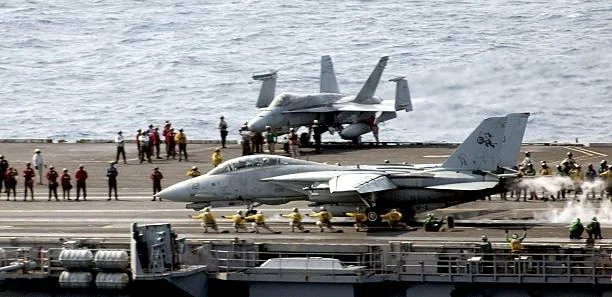
Top Gun likely did more for Navy recruitment than any advertising campaign the service has ever produced. But the recruitment argument itself remains difficult to quantify, and treating it as settled fact risks overstating what supporters of the bill can actually prove.
The deeper issue is whether the United States trusts the security architecture it already built. Do the deed-of-gift restrictions, reverter clauses, FAA oversight, and demilitarization requirements provide enough confidence to let part of American aviation history fly again? Or does the Pentagon still carry enough institutional fear from Cold War-era procurement leaks that it would prefer to destroy a historic aircraft rather than risk a single component leaving Department of Defense control?
The House Armed Services Committee hasn't answered yet. That silence is the only honest measure of whether the logic has actually taken hold or whether the shredder doctrine is simply waiting for the spotlight to move.
H.R. 8331 was introduced April 16, 2026 and referred to the House Armed Services Committee, where it awaits markup. The Senate companion bill (S.4161) passed by unanimous consent April 28. Both chambers must pass identical language before the bill can proceed to a presidential signature.
TAGGED: F-14 Tomcat, Maverick Act , Naval Aviation , Legacy Airpower, Defense Policy
-

ANDRES CARDENAS | Lead Analyst
Modern Warfighter Defense Publication
/ STAY CONNECTED /