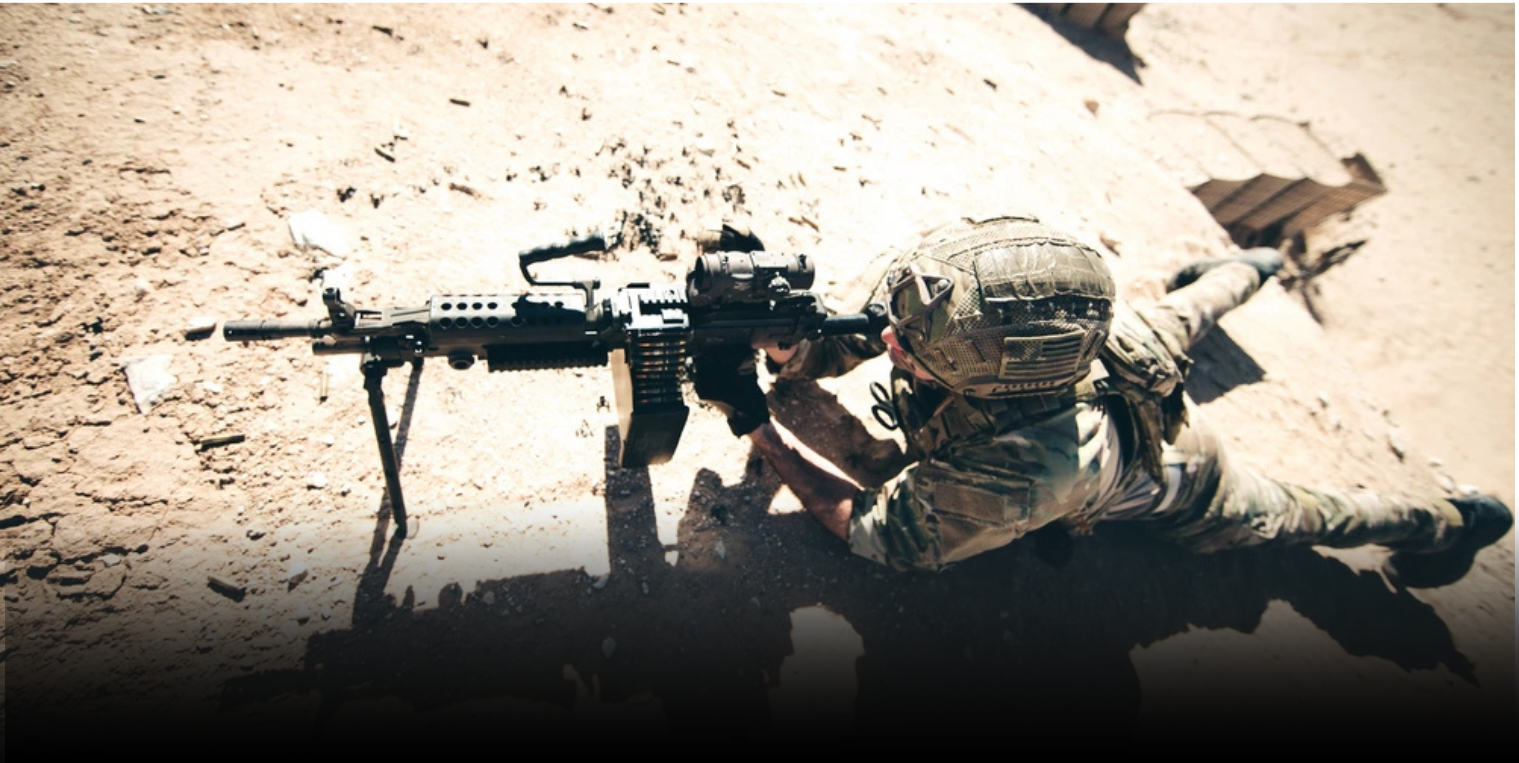
SOCOM wants the Mk 46’s replacement down to ten pounds. The harder part is keeping everything that makes it a machine gun.
August 23, 2026 | 5 min brief
TEN POUNDS OF BELT-FED
The Mk 46 was already the light machine gun. SOCOM cut the M249 down for teams that needed belt-fed fire without hauling a standard squad automatic weapon's full weight into every mission. The original Mk 46 Mod 0 cut roughly four pounds from the M249, depending on barrel and configuration. It kept the 5.56 NATO cartridge, belt feed, and quick-change barrel, then shed weight elsewhere so the gun could keep pace with an assault force.
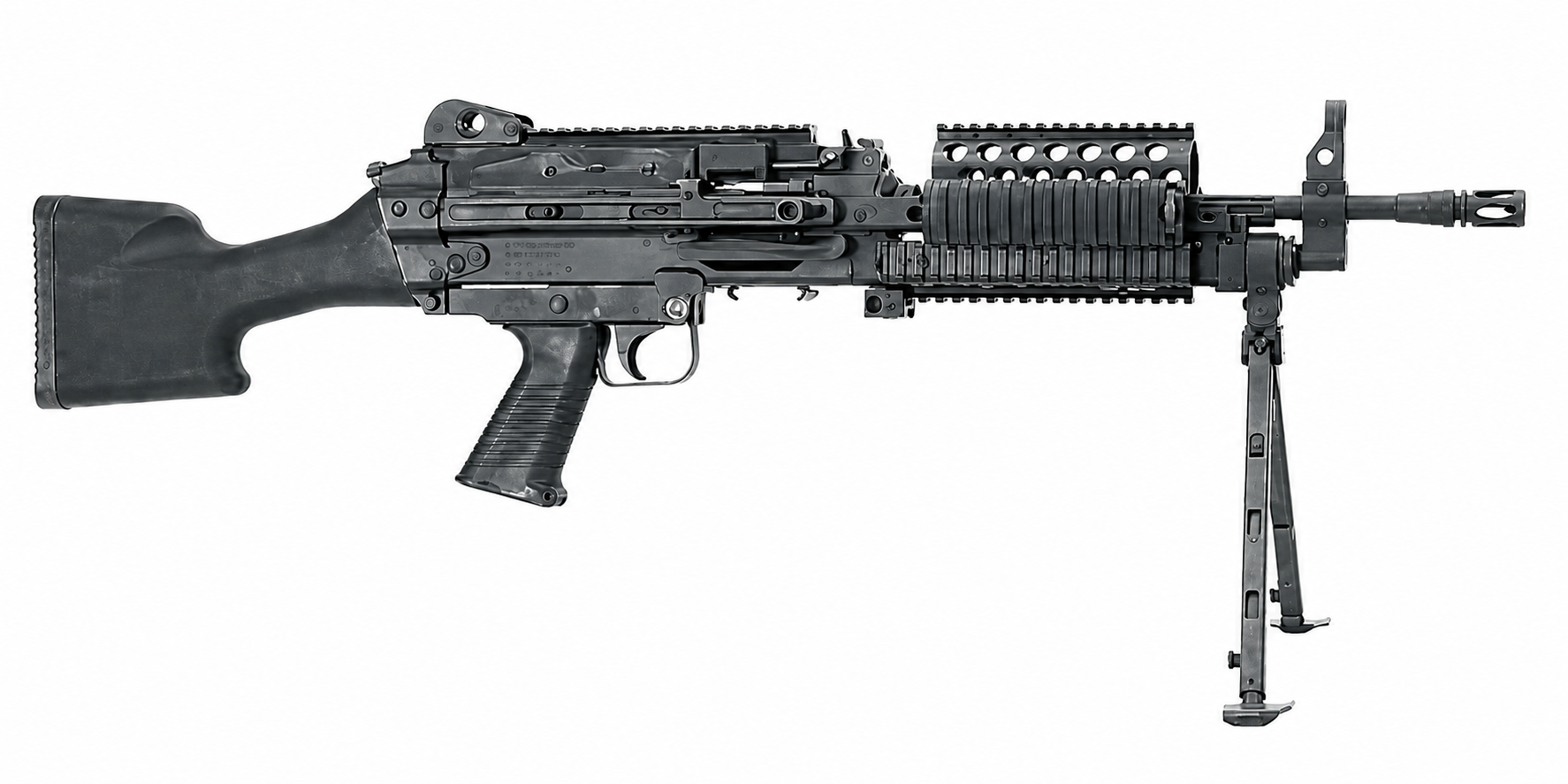
FN MK 46 Mod 0. The original special-operations variant removed components from the M249 architecture to reduce weight while retaining belt-fed 5.56mm fire.
Image: American Special Ops.
That weight crept back. The Mod 1 retrofit restored the carry handle, incorporated an improved bipod assembly, and revised the handguard and rail layout. FN lists that configuration at 15.44 pounds empty. SOCOM is going after that weight again with the Flyweight Assault Machine Gun, or FAMG. The replacement stays with 5.56×45mm, linked ammunition, a quick-change barrel, and at least 500 meters of effective range against area targets. The solicitation caps overall length at 39 inches, with a reduced 35-inch configuration as a goal, and calls for a collapsible buttstock. It has to keep firing without stoppages in extreme cold and extreme heat, and its recoil has to stay controlled enough to hit targets at maximum effective range in both day and night conditions. It still has to carry the optics and weapon accessories already hanging off modern SOF small arms.
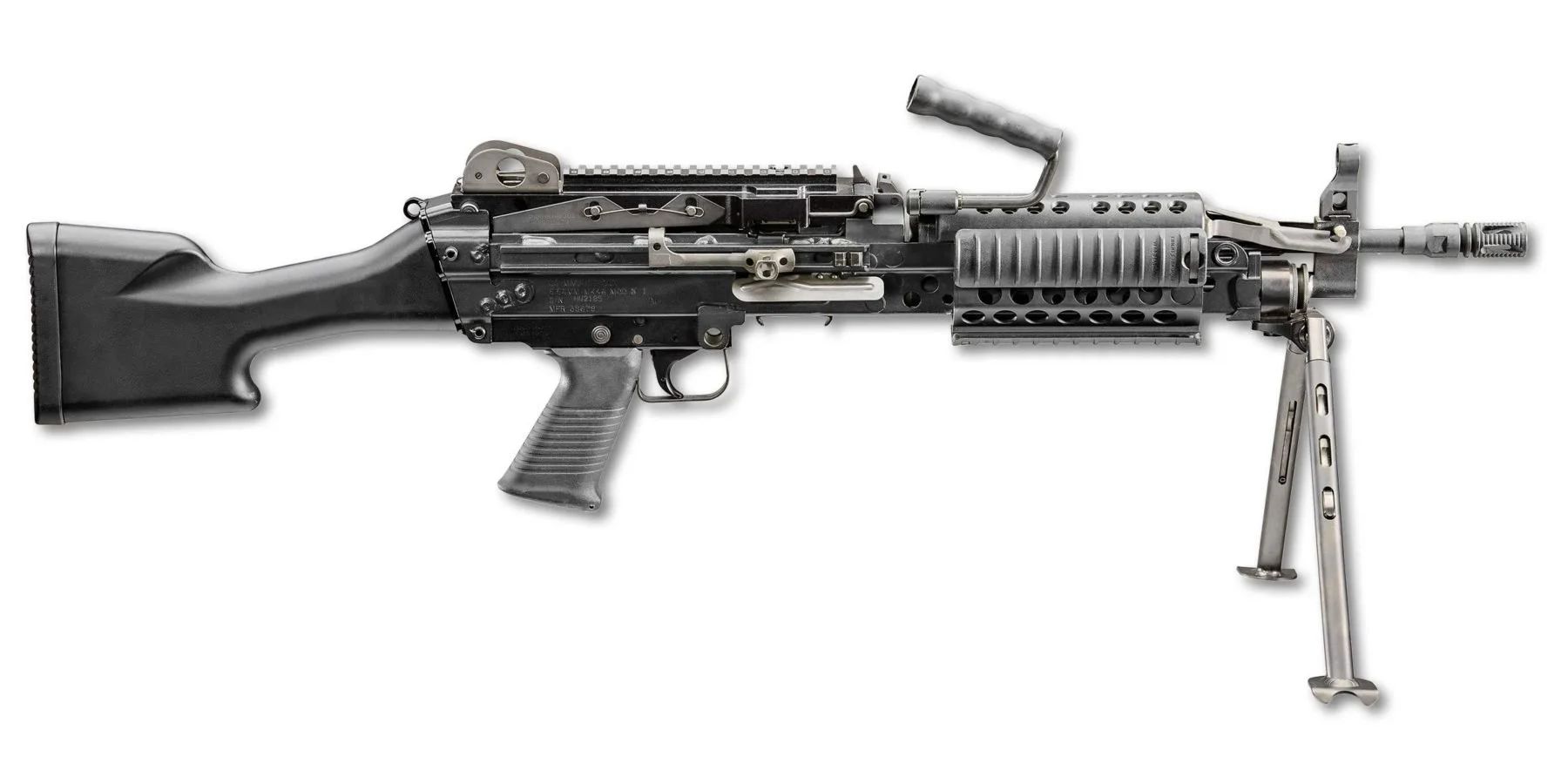
The Mk 46 Mod 1 added a heavier bipod and revised rail assembly, pushing the weapon’s empty weight to nearly 15.5 pounds. SOCOM’s FAMG program is intended to recover some of that lost portability.
Image: FN America
The objective weight is 10 pounds. SOCOM will accept 11.5 pounds at threshold. That figure covers the barrel, buttstock, bipod, carry handle, and standard rail interface. Sights and other accessories get added after the gun is already on the scale. FAMG is trying to bring the weapon back toward the weight range associated with the original Mk 46 while still meeting the reliability and accessory demands that came later.
THE BELT STAYS
FAMG keeps that role and stays with 5.56 NATO as SOCOM develops separate machine guns in 7.62 NATO and .338 Norma Magnum. That puts FAMG at the lighter end of the lineup, where the gun still has to move with the assault element and the ammunition still has to be carried by people.
That ammunition adds up fast. A complete M855A1 cartridge weighs about 190 grains. Six hundred linked rounds approach roughly 19 pounds before ammunition containers are counted. At 1,000 rounds, the belt pushes past 30 pounds. A lighter gun cuts one part of that load. The ammunition remains where it was.
An earlier Army effort attacked both sides of that equation. The Lightweight Small Arms Technologies program developed a 5.56 cased-telescoped machine gun weighing about 9.4 pounds and paired it with lighter ammunition. Textron published a combined weight of 28.5 pounds for the weapon and 1,000 rounds, compared with 48.9 pounds for an M249 and 1,000 rounds of conventional linked ammunition. FAMG keeps conventional linked 5.56, leaving the weapon as the main place to find the weight.
WHAT TEN POUNDS HAS TO SURVIVE
Taking five pounds out of a machine gun sounds simple until the gun starts firing. Every part carrying that weight has a job. The receiver carries the loads generated as the weapon fires. The operating group runs forward, strips another round from the belt, chambers it, fires, comes back, and does it again. The feed mechanism drags the next links across the tray. Heat pours into the barrel. The bipod has to hold the weapon steady when the gunner gets behind it. None of that slows down because the gun weighs ten pounds.
Machine guns have lost weight through material changes before. The M240L cut roughly five pounds from the M240B, with titanium receiver construction helping drive an 18 percent reduction. FAMG has to find similar savings inside a much smaller 5.56 weapon while carrying a modern accessory burden. One production gun already sits close to the requirement without meeting it outright. Knight's Armament lists its LAMG at 11.4 pounds, just inside the FAMG threshold but two pounds over the objective. No company has been publicly tied to a FAMG submission. SOCOM has yet to publicly identify the winning design or the engineering path industry will use to reach the target.
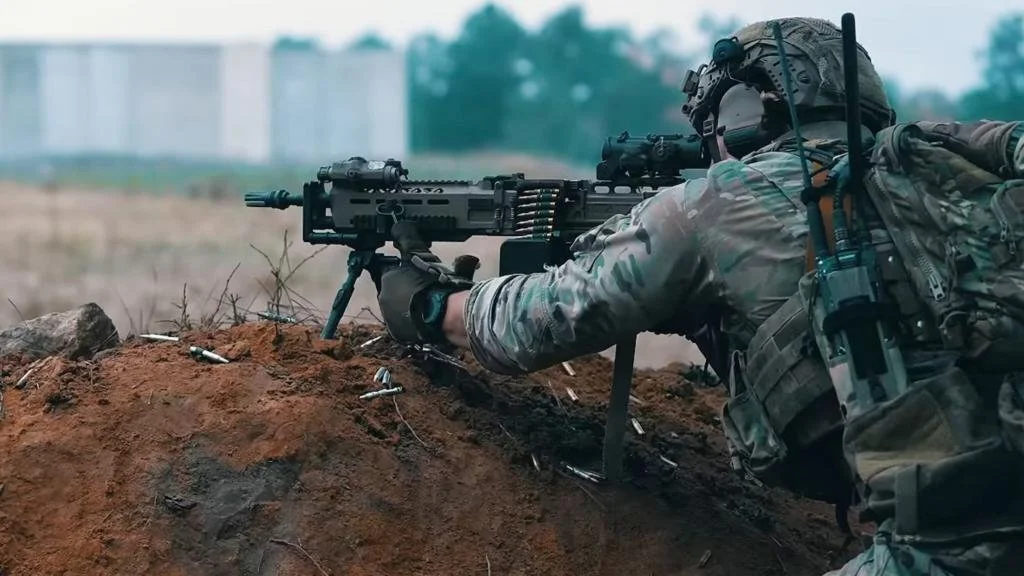
A Ranger assigned to 3rd Battalion, 75th Ranger Regiment fires a Knight’s Armament LAMG in 2023.
Image: SOFREP
Then come the belts. SOCOM plans to test FAMG with M855 and M855A1 in 200-round belts, fired six to eight rounds at a time. One burst becomes another. The barrel gets hotter. Carbon builds. The operating group keeps cycling and the feed system keeps pulling ammunition across the tray. The minimum reliability threshold is 1,400 mean rounds between stoppages, with an objective above 2,000.
That is where the weight target stops being interesting by itself. A manufacturer can make a light gun. SOCOM needs one that stays a machine gun after it gets hot. The quick-change barrel gives the gunner a way to deal with one part of that heat. The rest of the weapon still has to feed, fire, and cycle after the replacement barrel goes in. Ten pounds gets the weapon onto the scale. The firing schedule decides whether it belongs in the fight.
FAMG is one piece of a wider SOCOM machine-gun effort. Lt. Col. Alan Wood, SOCOM's Program Manager for SOF Lethality, named"three separate machine gun programs within SOCOM" at SOF Week. FAMG fills the 5.56 role alongside the 7.62 NATO Light Machine Gun-Assault and the .338 Norma Magnum Lightweight Machine Gun-Medium. FAMG is the lightest of the three, built for the gunner moving with the assault force.
Five pounds means more when you’re the one carrying the gun.
Naval Surface Warfare Center Crane released the FAMG Area of Interest in June 2026, with candidate weapons entering at Technology Readiness Level 7 or higher. Testing starts with limited safety work, then puts prototypes in operators' hands for user evaluation. Product verification and operational testing follow. SOCOM spokesperson Cmdr. Joe Vermette told Task & Purpose that the command expects a contract award in late 2027 and plans to begin fielding in fiscal 2028. The manufacturer and final design remain open.
The Mk 46 made belt-fed fire lighter to carry. FAMG is trying to cut it further. Testing will find out how much weight a machine gun can actually give up.
TAGGED: SOCOM, FAMG, Mk 46, Machine Guns, Small Arms, Warfighting Systems
-

ANDRES CARDENAS | Lead Analyst
Modern Warfighter Defense Publication
/ STAY CONNECTED/