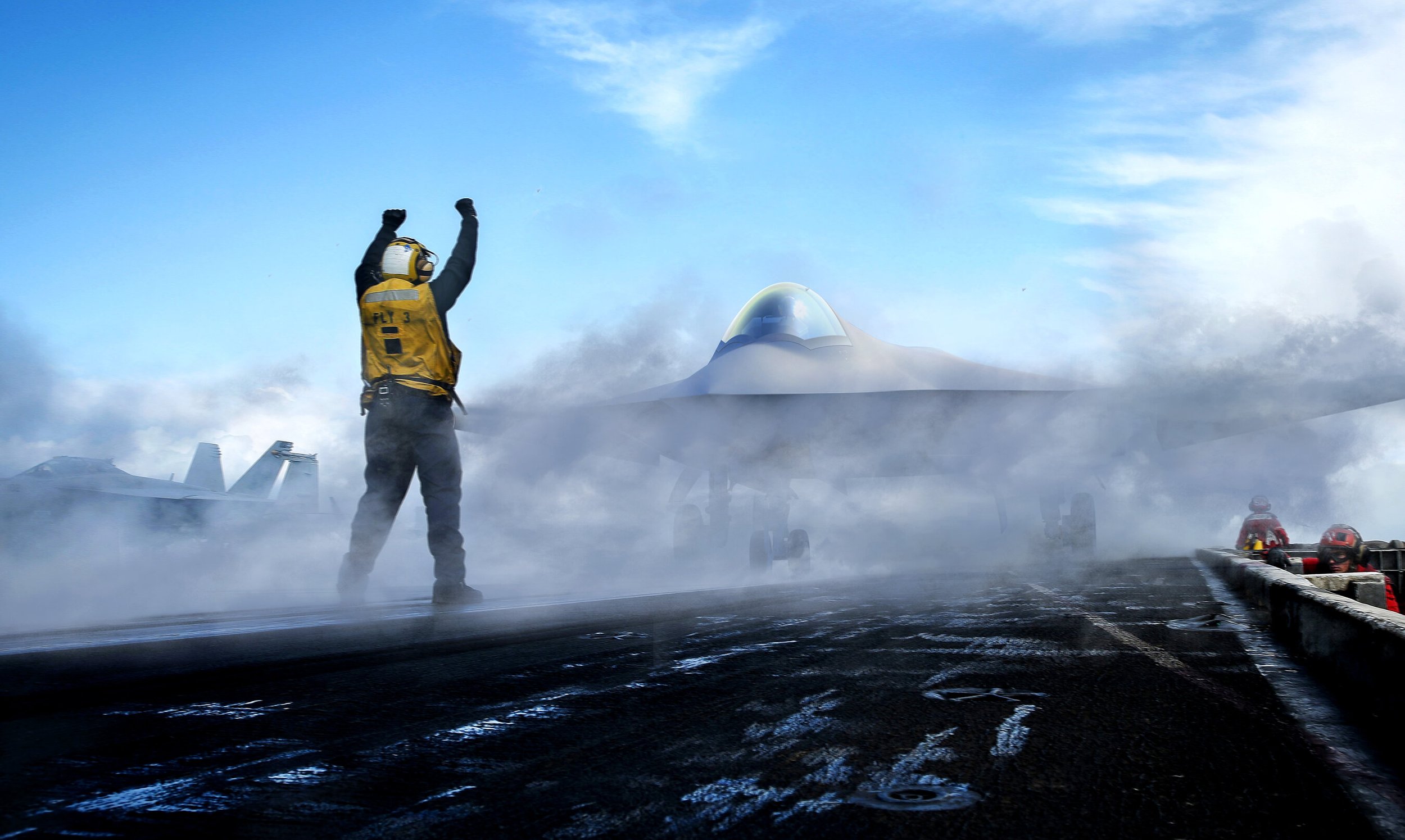

Congress forced the Navy’s fighter forward. The service now has to pay for its development and keep today’s Super Hornets and Growlers ready for combat through the transition.
September 29, 2026 | 7 min brief
The Pentagon Slowed F/A-XX for F-47. Boeing Now Has Both
ST. LOUIS, Missouri (September 29, 2026) — The Navy selected Boeing to develop F/A-XX, placing both publicly identified U.S. sixth-generation crewed fighter programs with one prime contractor. Last year, the Pentagon slowed the Navy’s fighter to protect the Air Force’s F-47 from competing demands on scarce engineers. Congress answered with an $897 million increase over the administration’s $74.3 million request and barred the department from using the covered funds to pause or cancel the program. The industrial problem behind the delay now has Boeing at its center.
The Department of War values the full-scale development contract at more than $20 billion. It buys multiple test aircraft for ground and airworthiness testing, along with systems and weapons integration. That commits Boeing to developing and demonstrating the aircraft. Fleet procurement will require further decisions, and the announced development value is separate from the amount obligated at award.
The government announcement also defines the transition. F/A-XX will augment and eventually replace the F/A-18E/F Super Hornet and EA-18G Growler beginning in the 2030s, operating alongside the F-35C. The Navy expects Super Hornets to remain useful into the 2040s. Selecting their successor therefore opens a period in which the service must finance a new fighter and keep the existing force ready for combat.
THE SLOWDOWN CONGRESS REJECTED
The Navy issued its follow-on development solicitation to Boeing, Northrop Grumman and Lockheed Martin in December 2023. Reuters reported Lockheed’s elimination in March 2025, citing two unnamed sources who said its proposal failed necessary criteria. Boeing and Northrop remained in a competition whose timing increasingly depended on decisions above the Navy.
At the Pentagon’s June 2025 budget briefing, officials said the industrial base could move fast on only one of the two fighter programs. They prioritized F-47 and proposed preserving limited F/A-XX design work to avoid overcommitting qualified engineers. The administration was making a choice about the order of development across the services, with the Navy’s future air wing absorbing the delay.
Congress rejected that pace. The FY2026 appropriations agreement coupled its funding increase with direction to award an engineering and manufacturing development contract to one performer. Section 8138 of the enacted law required the obligation of Navy research funds toward accelerated initial operational capability and prohibited using the covered funds to stop the program. Lawmakers had moved from supporting the requirement to directing its execution.
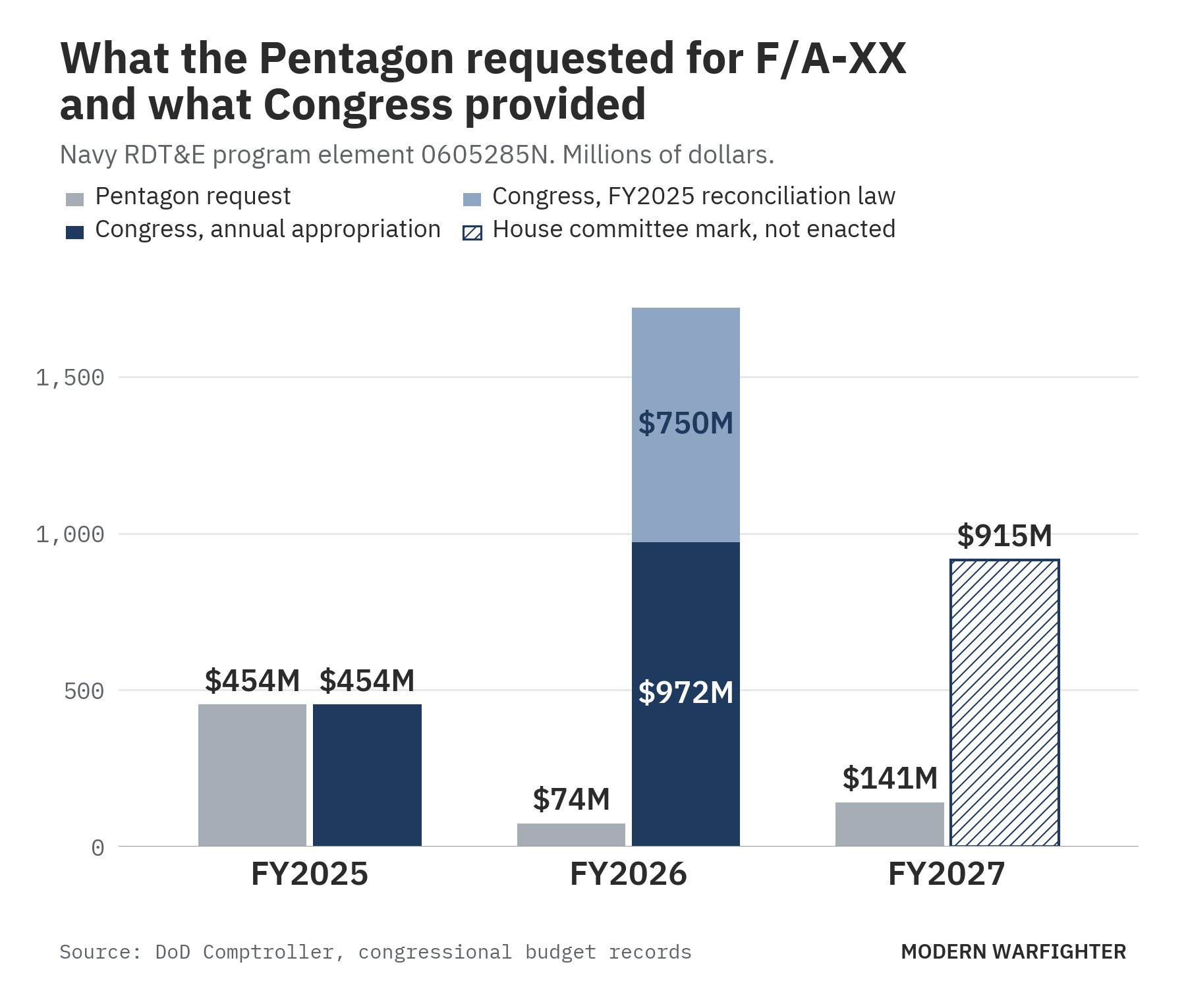
The Pentagon's FY2026 request would have held F/A-XX to minimal design funding. Congress funded development instead, and House appropriators have backed FY2027 at more than six times the Pentagon's request.
Chart: Modern Warfighter
House appropriators later said the department had failed to provide data supporting its industrial-capacity justification. They argued that continued uncertainty could itself damage the industrial base. The disagreement exposed the cost on both sides of the decision. Simultaneous programs can put pressure on scarce engineering skills. Prolonged delays can leave design teams and suppliers waiting for work that would sustain those skills.
The award came one day before the September 30, 2026, deadline for new obligations against FY2025 Navy research funds. Whether those expiring balances funded Boeing’s initial obligation, itself undisclosed, remains unresolved. FY2026 research money stays available through September 30, 2027, and a separate $750 million reconciliation appropriation for design and risk reduction through September 30, 2029. Those funding periods give development a basis to continue under the FY2027 continuing resolution, subject to available balances and execution restrictions. The CR alone does not stop the awarded effort.
WHY THE NAVY WANTS MORE REACH
The Navy’s case for proceeding rests on reach. In May 2026 testimony, Navy leaders connected F/A-XX directly to adversary investments in long-range weapons and the sensors that support them. The service described greater reach and persistence as essential to keeping carrier aviation effective against advanced defenses. Delay carries an operational cost because the threat develops on its own schedule.
A carrier’s aircraft determine how much combat power the ship can deliver from a given position. An opponent that can threaten the strike group at greater distances forces harder choices about where those aircraft launch and how they reach their objectives. Extending the air wing’s useful reach gives commanders more room to make those choices. The award announcement makes that connection explicit, describing F/A-XX as extending carrier reach and operating with Collaborative Combat Aircraft.
Earlier Navy plans place F/A-XX inside a wider system of weapons and sensors connected across the air wing. F-35C procurement and modernization continue as F/A-XX develops. Those improvements carry capability through the development interval and shape the mixed fighter force the new aircraft will join.
MQ-25 addresses another part of the reach problem. Its refueling mission is intended to return Super Hornets from tanker assignments to other work and preserve their flight hours. The Navy’s first production award in September followed the MQ-25A test aircraft’s April flight. Bringing the tanker into carrier operations is a substantial transition in its own right, with a direct effect on how the air wing uses its existing fighters.
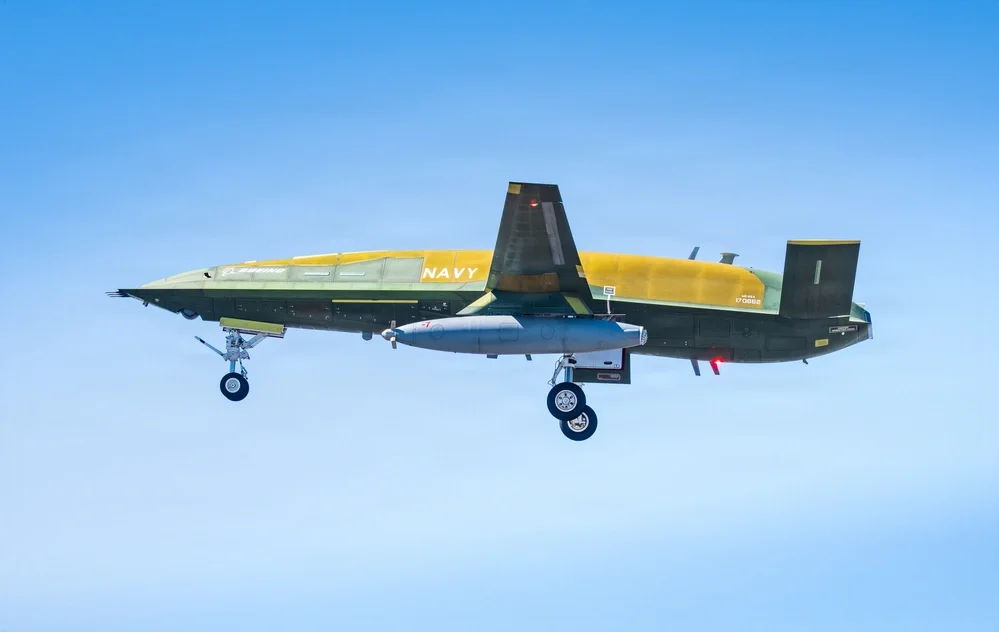
An MQ-25A Stingray on its first flight over southern Illinois, April 25, 2026. The Navy's first production award followed in September.
Credit: Boeing via DVIDS
The uncrewed combat architecture adds a different dependency. NAVAIR has reported F-35 pilots developing CCA tactics in simulation and separate autonomy experiments using surrogate aircraft. Operational value will depend on how crewed and uncrewed aircraft exchange information and coordinate their work when communications are contested. A fighter with greater reach needs an architecture that remains useful at that distance.
Growler’s inclusion in the award announcement brings airborne electronic attack directly into the transition. The Navy’s current jammer modernization continues as it develops the future force. The announcement does not specify how F/A-XX will assume the Growler’s electronic-attack role or when the Growler will retire. Electronic attack must remain available as the air wing changes around it.
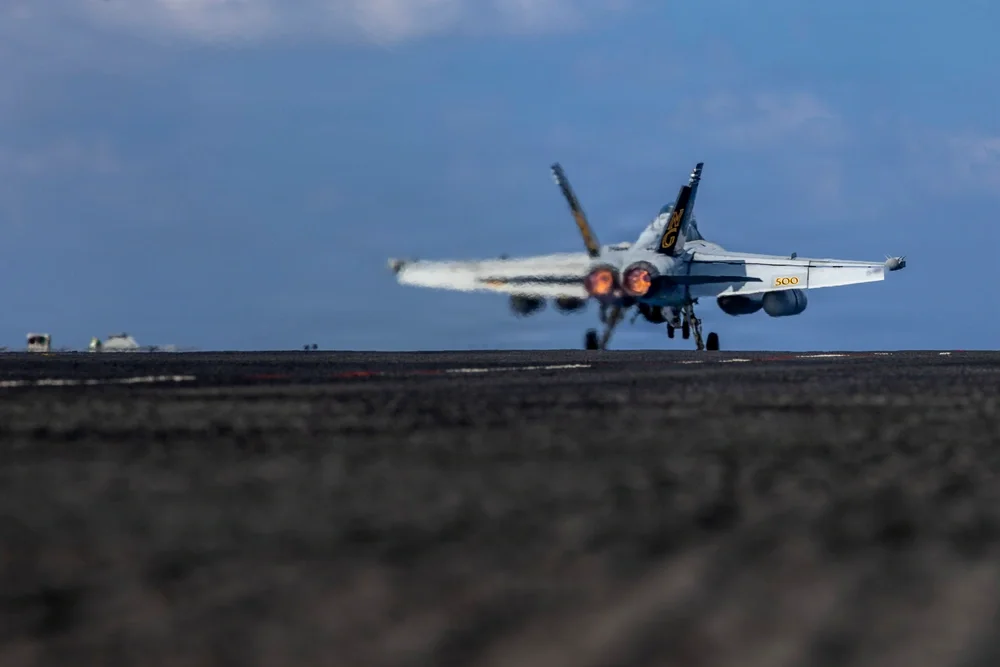
An EA-18G Growler from Electronic Attack Squadron 133 launches from USS Abraham Lincoln, January 23, 2026. The award announcement names the Growler among the aircraft F/A-XX will eventually replace.
U.S. Navy photo by Seaman Daniel Kimmelman via DVIDS
TWO FIGHTERS INSIDE BOEING
The Air Force awarded Boeing the F-47 EMD contract on March 21, 2025. F/A-XX gives the company another major development responsibility alongside MQ-25 and its established fighter business. Boeing continues F-15 work as Super Hornet production approaches its end. Development demand and existing production therefore meet inside an enterprise that also has to support aircraft already delivered.
Boeing says it prepared for that combination. In its award statement, the company said it had planned and invested to deliver two advanced fighters in parallel. It pointed to investment in people and technology, including a secure manufacturing facility under construction in St. Louis. MQ-25 production at Mascoutah, Illinois, is separately confirmed by the Navy.
The Pentagon’s concern remained active immediately before the award. The War Zone reported that Gen. Dale White, speaking at a September 15 media roundtable, credited Boeing’s investment and expressed confidence in F-47’s progress. He also identified workforce and test demands among the industrial issues still requiring management.
The award also concentrates new crewed fighter design responsibility. Northrop remains the B-21 prime and continues work on other combat-aircraft programs, including F-35. Lockheed Martin retains F-35 and F-16 production as well as F-22 support. Their continuing businesses preserve substantial capability across the industry, although Boeing now holds the prime roles in both announced sixth-generation fighter programs. Production and sustainment keep those companies active, but leading a new fighter design exercises different skills. The Pentagon has already documented declining competition among fixed-wing suppliers and gaps in design work.
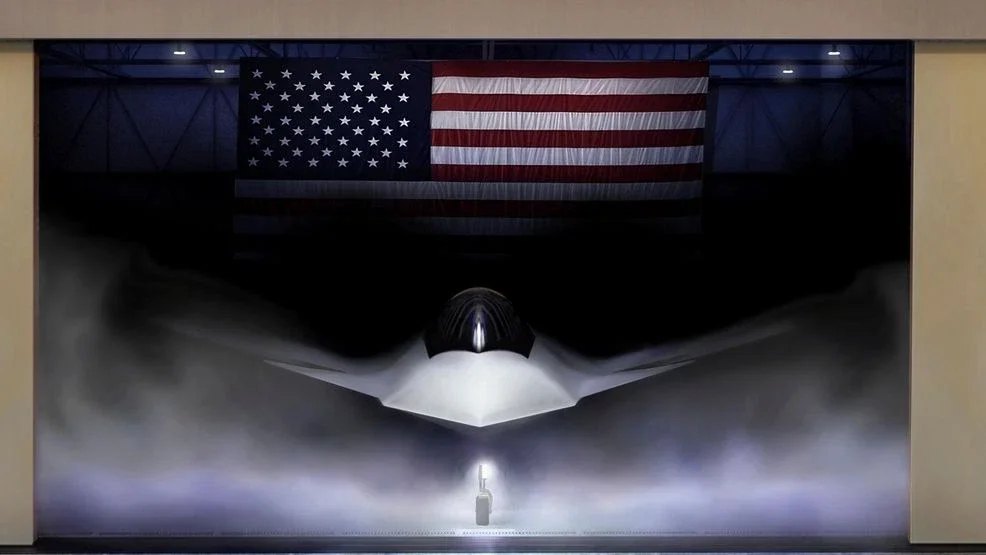
The Air Force's F-47, awarded to Boeing in March 2025. Boeing now holds the prime role on both announced U.S. sixth-generation fighter programs.
Rendering: U.S. Air Force.
THE SUPER HORNET’S LONG EXIT
The Super Hornet connects the industrial transition to the operational one. NAVAIR’s March 2024 award covered 17 Block III aircraft and technical data, with deliveries then planned through spring 2027. Buying the data alongside the aircraft prepared for support beyond new production. The final delivery and the final combat mission belong to different phases of the fleet’s life.
Production and retirement run on different clocks, with sustainment spanning both. In April 2026, Fleet Readiness Center Southwest described structural service-life work and Block III modernization as supporting Super Hornet relevance into the 2040s. The structural work addresses the airframe’s useful life. The avionics work improves what that airframe can contribute during the years it remains in service.
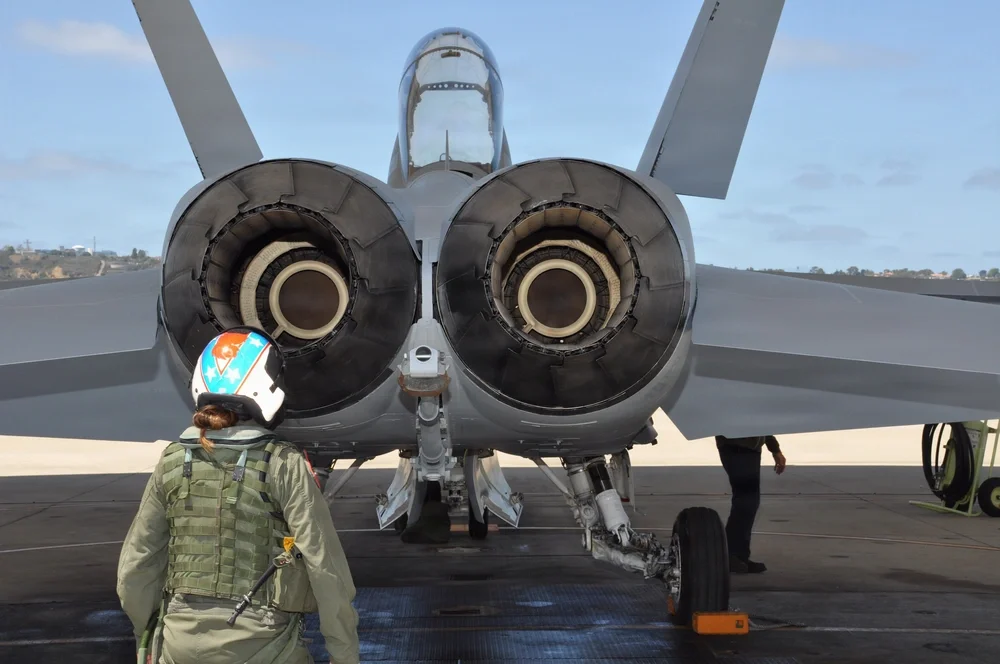
A Super Hornet on the flight line at Fleet Readiness Center Southwest in San Diego, where the depot completed its first in-house Block III modification in April 2026. The structural service-life work extends the airframe from 6,000 to 10,000 flight hours.
U.S. Navy photo by Michael A. Furlano.
Placed beside the award’s 2030s transition window, that service horizon points to a long handover. The Navy will be introducing a successor as it continues investing in the force already operating from its carriers. Precise overlap will depend on fielding progress and retirement decisions, but sustaining the Super Hornet remains a central requirement throughout the development period.
The financial consequence follows directly. Development spending adds to the Navy’s bills years before the new fighter relieves any of the cost of sustaining the existing fleet. Depots still need parts and repair capacity. Squadrons still need available aircraft. A later successor increases the demands placed on those organizations, and a decline in legacy readiness reduces the useful force the Navy can carry into the transition.
St. Louis faces the industrial counterpart. New fighter awards give Boeing development work beyond the Super Hornet production run. Turning that work into continuity requires the right skills and facilities at the right stages. A legacy production line’s closure and a new program’s growth have to be managed as separate events, with sustainment continuing alongside them.
Congress settled whether F/A-XX would proceed, and Boeing holds both fighters. The harder work now falls to the Navy and Boeing. Boeing has to develop F/A-XX alongside F-47. The Navy has to pay for that development as it keeps aging Super Hornets and Growlers mission-ready, and it has to bring MQ-25 and uncrewed teammates into carrier operations on schedules that let F/A-XX join a working air wing in the 2030s. The award will be judged by whether the carrier force holds its present combat power through every year of that handover.
VERIFICATION: The source record behind this analysis, including what could not be confirmed. VIEW VERIFICATION →
TAGGED: F/A-XX, F-47, Carrier Aviation, Defense Industrial Base, Super Hornet, Growler, MQ-25, Collaborative Combat Aircraft.
-

ANDRES CARDENAS | Lead Analyst
Modern Warfighter Defense Publication
/ STAY CONNECTED /