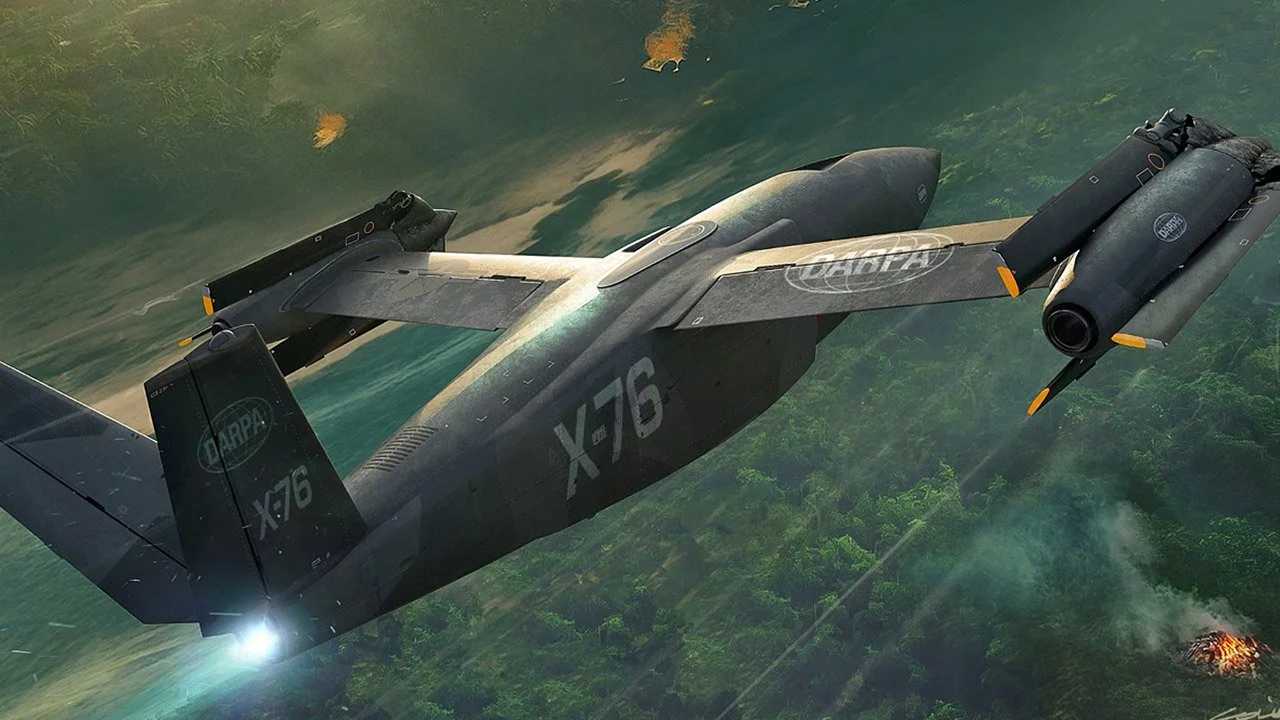

Bell's X-76 and the Stop/Fold Approach to High-Speed VTOL
October 12, 2026 | 6 min brief
MODERN WARFIGHTER (October 12, 2026) — The Air Force flies long-range infiltration and resupply for special operations forces in the CV-22B Osprey, a tiltrotor that can land where there is no runway. The National Museum of the U.S. Air Force lists its maximum cruising speed at 277 mph, about 240 knots.
Bell's X-76 is DARPA's attempt to keep that runway independence and push cruise to 400 to 450 knots at relevant altitudes. The agency counts infiltration and contested logistics among the potential missions. The stop/fold demonstrator is designed to hover on rotors and cruise on jet thrust, with its rotors stopped and folded.
Speed and Runway Independent Technologies, or SPRINT, is the joint DARPA and U.S. Special Operations Command (SOCOM) program behind the aircraft. DARPA intends the X-76's flight tests to validate technology that could scale to military aircraft of different sizes. In March 2026, the agency announced completion of the demonstrator's critical design review. Phase 2 covers aircraft construction and ground testing.
Bell reports running the fold sequence with earlier test articles on a track and in a wind tunnel. The program's case depends on doing it in the air with the complete aircraft, in Phase 3 flight testing planned for early 2028.
Stop/Fold Separates Vertical Lift From Cruise Thrust
The Navy describes the V-22's nacelles rotating forward for airplane-mode flight, with the rotors providing propulsive thrust. Cmdr. Ian Higgins, the U.S. Navy officer serving as DARPA's SPRINT program manager, told Aerospace Testing International in September 2026 that exposed rotors create drag and limit forward-flight speed.
Bell's design shifts lift from the rotors to the wing as propulsion changes to jet thrust. The aircraft still carries its rotors and folding hardware through cruise, and their weight and mechanical complexity remain part of the cost of vertical access.
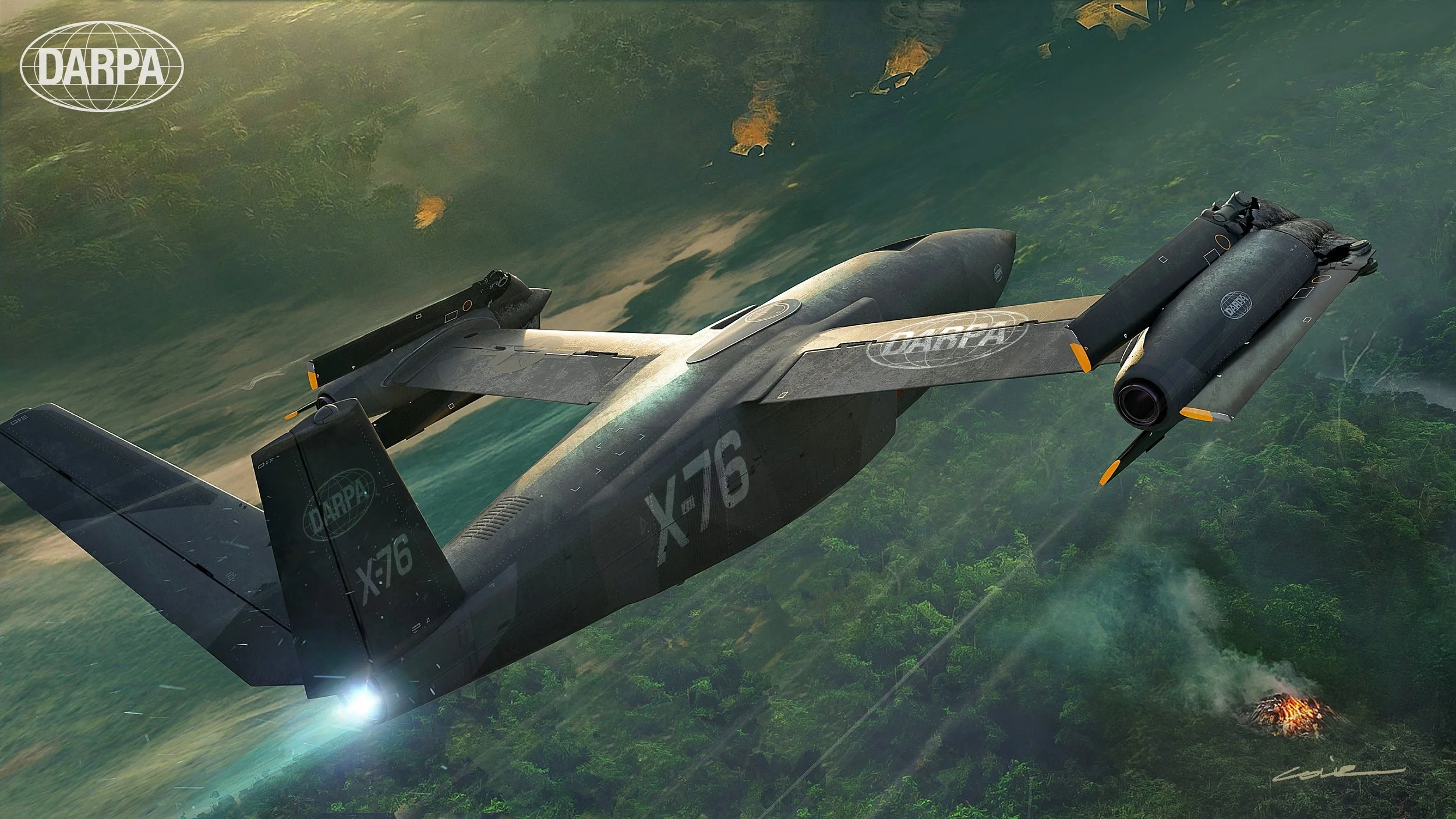
DARPA's artist concept depicts the SPRINT X-76 with folded rotors in its proposed cruise configuration.
Credit: DARPA / Colie Wertz
DARPA Chose Folded Rotors Over Embedded Lift Fans
SPRINT entered Phase 1 in November 2023, and DARPA funded two preliminary designs in May 2024. Aurora Flight Sciences proposed a fan-in-wing aircraft with three embedded lift fans and integrated covers for the transition to forward flight. Bell kept rotors for vertical flight and folded them out of the airstream for cruise.
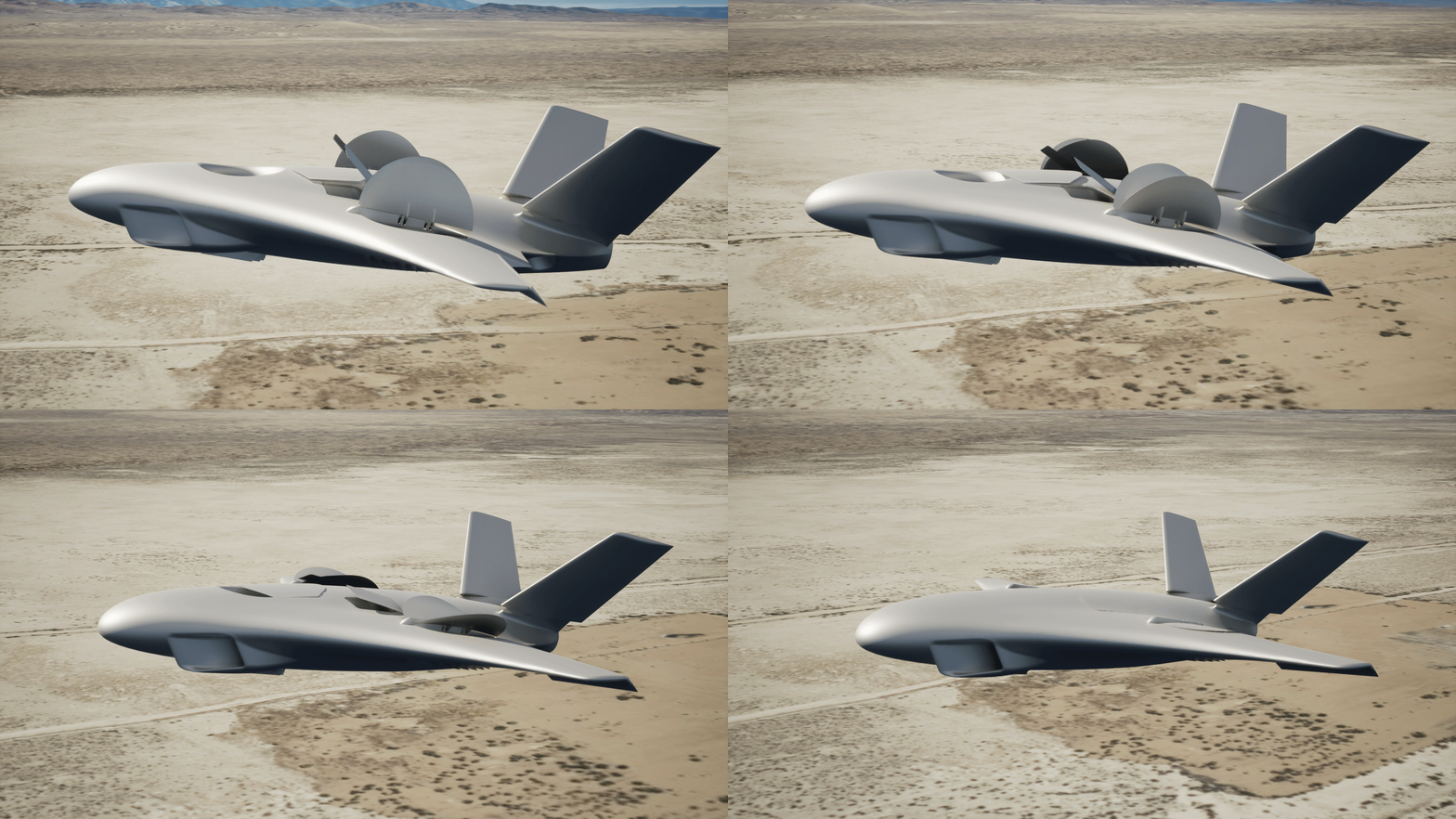
Aurora's concept animation depicts its three-fan SPRINT proposal with integrated lift-fan covers.
Credit: Aurora Flight Sciences
Both designs carry their vertical-lift hardware through cruise. Aurora's lift fans ride inside the wing, and Bell's folded rotors ride outside it. In June 2025, DARPA awarded Bell the contract for Phases 2 and 3, making it the sole performer.
Bell's Reported Fold Tests Have Stayed on the Ground
Bell announced completion of sled testing at Holloman Air Force Base in February 2024. The company said the work demonstrated folding-rotor technology, integrated propulsion and flight controls at representative flight speeds. Its release gave no numerical speed.
Three Bell authors described the company's track-guided test vehicle on the Holloman High Speed Test Track in a 2025 Vertical Flight Society Forum paper. Their abstract called the result the "first known powered prop-to-jet and jet-to-prop transition."
In December 2024, Bell reported wind-tunnel testing at Wichita State University's National Institute for Aviation Research. The company said the campaign evaluated stability and control through rotor-fold and rotor-unfold sequences. Bell described the campaigns as risk-reduction work supporting a future flight demonstration.
Neither campaign required the aircraft to stay airborne through the conversion. In flight, the wing has to take over lift as the rotors slow and stop, and Higgins called that transition the most challenging part of the design.
Both test announcements preceded DARPA's critical design review announcement. Bell's releases do not specify how closely their test articles correspond to the final X-76 design.
The 2028 Flights Must Prove the Conversion Both Ways
Higgins described the demonstrator as uncrewed, with an operator supplying heading and altitude commands and the flight-control computer flying the aircraft. Aerospace Testing International also reported a 1,000-pound payload target used to size the program-defined test mission.
Through the conversion, Higgins said, the flight controls must keep the aircraft stable and within component load limits. The conversion sequence must also work in reverse as the aircraft returns from high-speed flight.
Phase 3 is planned to put that sequence into free flight. The decisive demonstration is stable conversion to jet-powered cruise followed by a return to rotor-borne flight for vertical landing.
VERIFICATION: The source record behind this analysis, including what could not be confirmed. VIEW VERIFICATION →
TAGGED: Bell, X-76, DARPA SPRINT, High-Speed VTOL
-

ANDRES CARDENAS | Lead Analyst
Modern Warfighter Defense Publication
/ STAY CONNECTED /