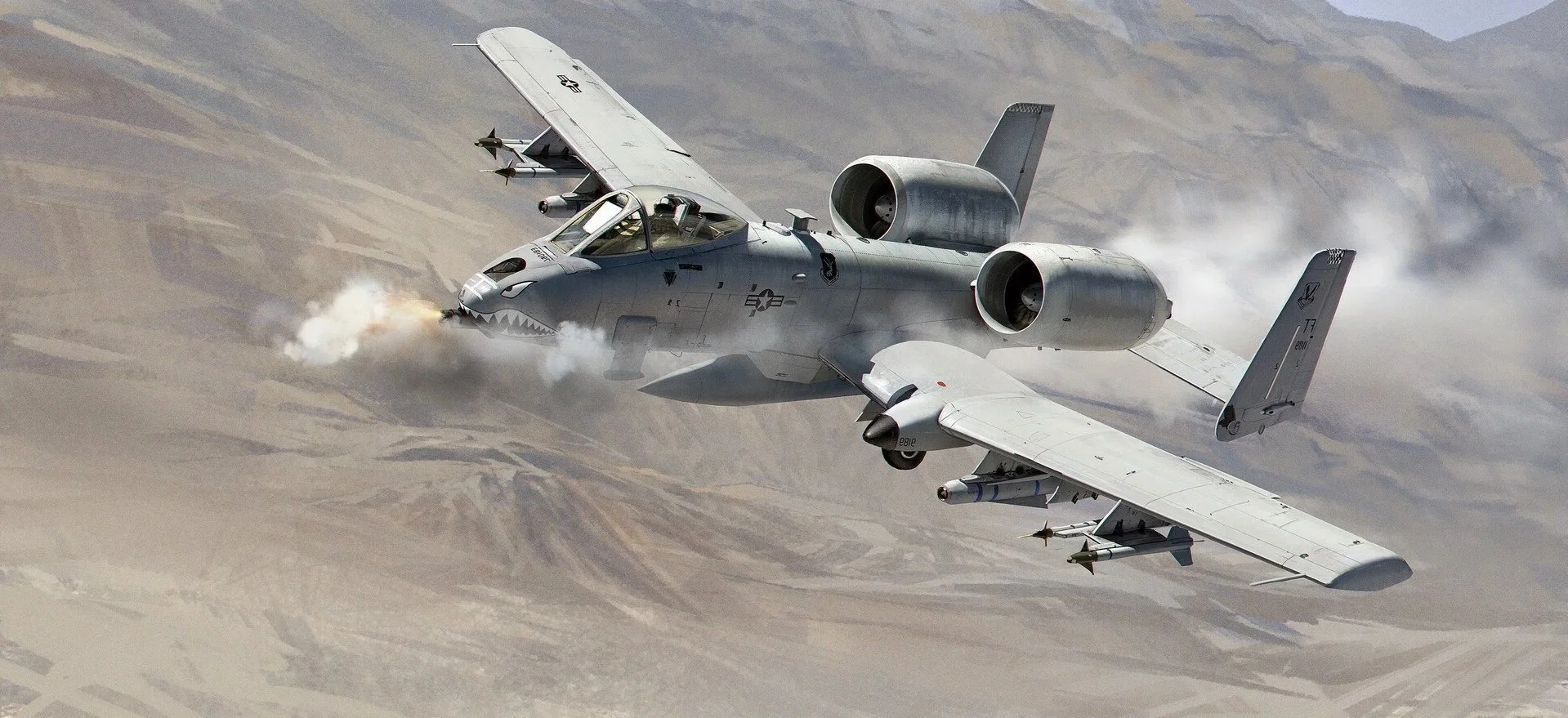
How the A-10 Extension to 2030 Exposes the Strategic Gap in the Air Force’s Future Fleet.
April 21, 2026 | 6 min read
STILL IN THE FIGHT
MODERN WARFIGHTER (April 20, 2026) — The U.S. Air Force will keep the A-10 Thunderbolt II in service through 2030, delaying a planned retirement as operational demand and congressional pressure keep the aircraft in the fight.
Air Force Secretary Troy Meink framed the extension as a combat-power decision, saying it preserves capacity while the defense industrial base works to increase aircraft production. Defense Secretary Pete Hegseth reduced the message to its political edge: “Long live the Warthog.”
Renewed volatility in the Middle East pulled the A-10 back into active use well before this extension was announced. U.S. Air Forces Central Command (AFCENT) has employed the platform in close air support, armed overwatch, and maritime strike roles against Houthi surface threats in the Red Sea corridor.
That last mission is worth pausing on. The A-10 can attack boats, but it was designed primarily for close air support and killing armored ground targets. Its combination of loiter time, low-speed handling, and the ability to deliver sustained, accurate fire against slow-moving surface targets made it a practical choice when higher-end platforms were either unavailable or operationally unsuitable for extended over-water presence at low cost. In a theater where small vessels have become a persistent threat, the Warthog's characteristics translated, imperfectly but functionally.
This is the pattern the extension formalizes. The A-10 keeps finding its way into fights the Air Force did not specifically design it for, because the underlying qualities, persistence, payload, and presence, continue to shape outcomes in permissive and semi-permissive environments. The extension preserves a capability the force has already had to use.
For more than a decade, the Air Force has tried to move past the A-10. The argument has been consistent: future conflicts will punish slow, low-flying aircraft operating close to the fight. Congress has been just as consistent in pushing back, forcing the service to retain the platform while replacement concepts mature.
In the FY2026 National Defense Authorization Act, Congress moved to block A-10 divestments below 103 aircraft while requiring continued reporting on the fleet's future. This isn’t a preference; it’s a legal floor. The Air Force cannot divest below that threshold regardless of readiness costs, budget pressure, or strategic preference. Until Congress is satisfied that emerging systems can absorb the close air support mission at scale, the service's options are constrained by statute.
The 2030 extension keeps that friction in place and confirms the Air Force still lacks a clean handoff for the mission.
PRESENCE OVER PRECISION
The A-10C was designed around the 30mm GAU-8 Avenger rotary cannon and built for sustained close air support of ground forces. Its value is persistence, weapons load, low-speed handling, and the ability to remain near the fight when conditions allow it. It’s one of the few platforms capable of delivering sustained, visible presence over the battlefield, a quality ground commanders continue to value and Congress has repeatedly protected.
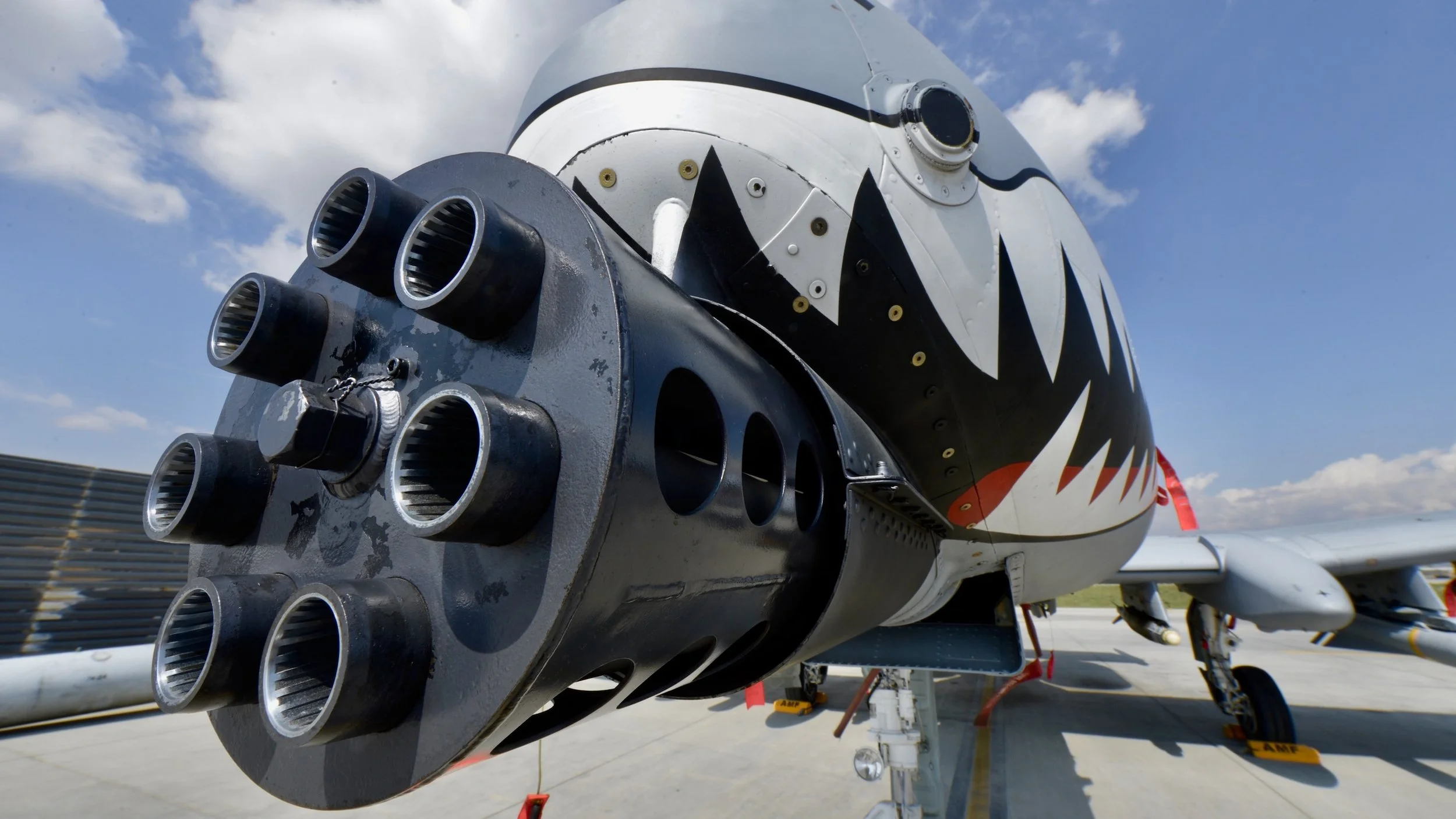
The A-10’s 30mm GAU-8 remains central to the aircraft’s close air support identity.
Media: U.S. Air Force
That is also where the limit begins. In a battlespace shaped by layered sensors, long-range fires, and electronic warfare, the A-10's margin tightens quickly. The same qualities that make it useful in permissive or semi-permissive environments become liabilities against a peer air-defense network. The Air Force's survivability concerns are legitimate. But survivability is only one side of the equation.
The other side is availability and cost. The A-10's lower cost per flight hour compared to fifth-generation platforms reinforces that role in sustained operations. Keeping it in service maintains a pool of aircraft capable of handling close air support without pulling F-35s into roles that carry higher cost and limited availability. In a sustained operation, that math matters.
THE COST INSIDE THE FORCE
The extension doesn’t come free. Every year the A-10 remains in service, pilots and maintainers remain tied to an aircraft the Air Force is trying to move beyond. A-10 pilots aren’t directly interchangeable with F-35 or collaborative combat aircraft pipelines. The qualification processes differ, and transition timelines compound. With the Air Force already managing personnel shortfalls across several airframes, each year of A-10 extension is a year of delayed qualification in the platforms the service actually wants to grow.
The maintenance burden compounds the problem. The A-10 fleet is aging, and sustaining it requires keeping a separate industrial and parts supply chain alive alongside the systems intended to replace it. That isn’t fatal to the extension's logic, but it is a real cost the force absorbs internally, in personnel, in training capacity, and in transition momentum.
THE SPLIT FORCE
The result is a force operating in two directions at once. One path pushes toward stealth, stand-off weapons, collaborative combat aircraft, and distributed sensing. The other still depends on aircraft that can remain overhead, respond directly, and deliver sustained effects without burning through limited high-end capacity.
Keeping the A-10 through 2030 buys time inside that overlap. But the overlap has a deadline, and the systems expected to close it are still maturing. The Collaborative Combat Aircraft program is advancing, but its timeline for fielding at operational scale and absorbing the sustained close air support workload remains unresolved against a 2030 A-10 exit. Stand-off weapons can extend reach, but they don’t replicate presence. Distributed sensing can identify targets, but it cannot loiter.
The Air Force is betting that by 2030, enough of those capabilities will be in place to absorb the mission. That bet may prove correct. But it has not been demonstrated yet, and the extension is an acknowledgment of that gap.
FINAL WORD
The A-10 extension exposes a strategic gap the Air Force has not yet closed. The service is building a force designed to survive at range, while today's fights continue to demand presence over the battlefield. Congress has written that gap into law, requiring the Air Force to maintain the platform until a credible replacement exists at scale.
Until that gap is closed, in capability, in pipeline, and in demonstrated operational capacity, the Warthog remains less a legacy platform and more a signal that the transition is still incomplete. The 2030 deadline is not a guarantee. It is the next pressure point.
TAGGED: A-10 Thunderbolt II, Force Structure, Close Air Support, Air Force Modernization
RELATED COVERAGE
-
![]()
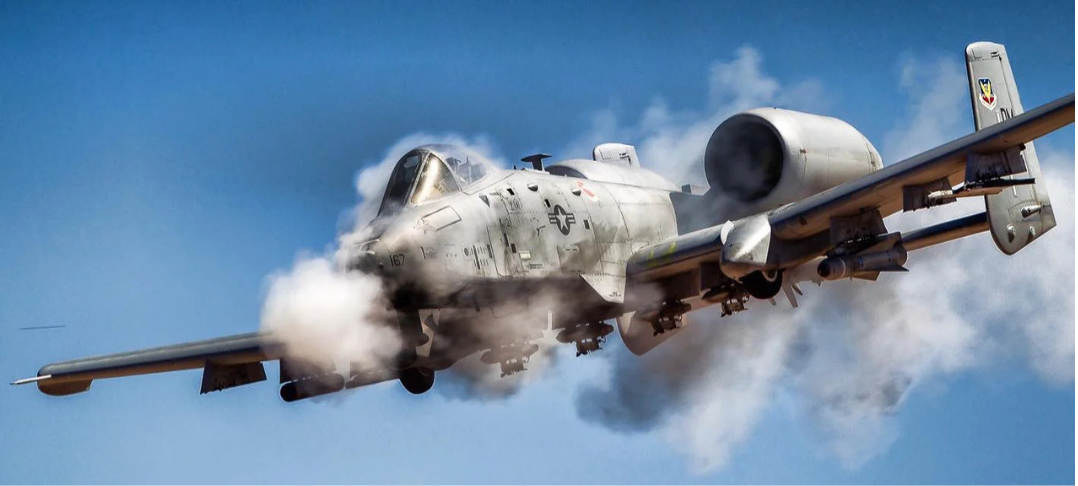
The BRRRRT Act: Congress Raises the A-10 Floor Again
H.R. 9780 would raise the A-10 fleet floor to 126 aircraft through 2033 while Congress weighs how much of the training, maintenance, and depot structure must be restored to sustain it.
-

ANDRES CARDENAS | Lead Analyst
Modern Warfighter Defense Publication
/ STAY CONNECTED /